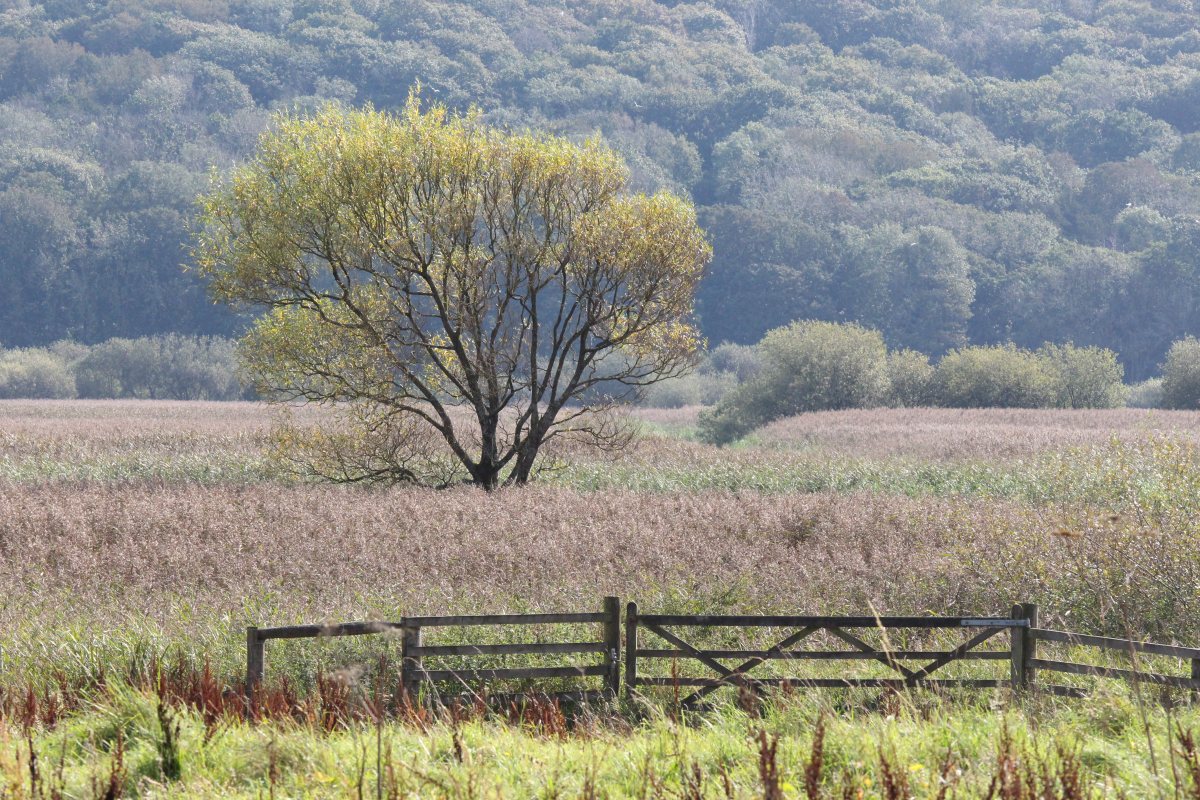
Black-tailed godwits, Leighton Moss
Showing posts with label Silverdale. Show all posts

Thursday, 14 July 2022

Silverdale

Oystercatchers, Jenny Brown's Point

Continuing the week's seaside theme I got myself an old man's explorer ticket and travelled up to Silverdale. This time it wasn't for a visit to Leighton Moss, instead I was off for a wander round Jenny Brown's Point. I haven't done this for years; an adult Sabine's gull has been feeding there for the past few days and that provided the prod for going for the walk.

The Met Office promised a relatively cool and cloudy day, it was warm and sunny. The effects of the prolonged dry weather was evident on the coastal pools as the train pulled into Silverdale: they were bone dry save for the furthest one out, which had a big puddle in it. A couple of mallards loafed by the side of the puddle while a herd of about fifty Canada geese shared an expanse of dry mud with half a dozen sheep. We'd passed a male marsh harrier a couple of minutes earlier as it hunted low over the marsh by the railway line.

I got off the train and walked back towards the coastal hides but instead of turning into New Road and down to the hides I carried on down Slackwood Road until I got to the junction with Hollins Lane and walked down there to Jenny Brown's Point.

Along Slackwood Road 

The road was busier than I remembered. There were woodpigeons in the fields with greenfinches singing in the margins, chiffchaffs, great tits and nuthatches called from the wooded areas. The roadsides, where not planted gardens, were thick with thistles, lady's bedstraw and cranesbills and they were busy with bees and butterflies. Most of the butterflies were gatekeepers and meadow browns, with a few ringlets, commas and large whites to keep them company.

Spear thistle

I bumped into a chap walking down the road who told me the Sabine's gull had just flown off. Evidently the traffic was birdwatchers haring down to Leighton Moss to see if it turned up on the causeway there. (It didn't, it's not been seen at all since.) No matter, I was here for a walk round Jenny Brown's Point and the gull would just have been icing on the cake.

Jenny Brown's Point 

I turned left at the farm at the bottom of Hollins Lane and carried on down the road to Jenny Brown's Point. It was high tide, just about to ebb. A couple of lesser black-backs and a herring gull were loafing on nearby rocks but most of the birds were on the other side of the little cove. A black smudge across the tideline was a couple of hundred oystercatchers, something like a hundred curlews formed a line further along the shore. The inland curve of the shoreline was littered with gulls, mostly black-headed with perhaps a dozen lesser black-backs amongst them. Further inland I could see the heads of Canada geese and greylags occasionally bobbing up out of the long, dry grass.

Juvenile black-headed gull, Jenny Brown's Point

I found a not entirely uncomfortable seat on the rocks to watch the cove (the limestone dips 20° towards the sea here, which is not ideal). As the sea slowly retreated the first birds to venture out onto the fresh mud were black-headed gulls. A surprising proportion of these were juveniles, I suppose they're still enjoying the novelty of it. Eventually the black line of oystercatchers started to move away from the shore and become more diffuse, eventually forming three smaller flocks of birds then breaking up completely as they started flying out into the bay in strings of a dozen a so at a time. The curlews quietly dispersed, one minute there was a dark grey line across the mud, the next a rash of individuals spread across the tideline. The surprise of the day was a sudden panicky call from behind me as a juvenile green woodpecker was accidentally flushed from the roadside by some walkers. It flew out and over my head then suddenly veered back round whence it came. It's an odd thing: a very high percentage of the green woodpeckers I've seen, as opposed to just heard, have been at the seaside.

Jenny Brown's Point 

I lingered long enough to be convinced the Sabine's gull wasn't coming back and there were no surprises on the shoreline then I wandered back by way of Jack Scout, giving me the chance to scan the bay just in case, like. Lots more black-headed gulls and lesser black-backs but no albatrosses today.

The heathland on Jack Scout was busy with yet more gatekeepers and meadow browns, both of which were outnumbered by ringlets. Blackcaps sang from small trees while linnets and whitethroats bounced about in the bracken.

Jack Scout

I checked the time and the trains, noticed the string of cancellations and decided I needed to get a shift on for the station. The day's tally was expanded by a jay feeding by the roadside and a sparrowhawk being mobbed by house martins above the farmyard.

I got my train safely. It was cancelled at Preston, which isn't so bad because there's not generally too long a wait here for the next train going somewhere near Manchester. We'll draw a veil over the connection with my train home at Oxford Road which a dozen of us missed by two yards. A sour note ending what had been an excellent walk with some gentle birdwatching along the way.

Tuesday, 20 April 2021

Leighton Moss

Male marsh harrier

I wanted a lazy day so I got an old man's rail ticket and went for an amble round Leighton Moss. The hides are still closed but the long paths into the reedbeds are now open so I thought it would be an hour or two's gentle exercise.

(The journey to Silverdale was an object lesson in never taking the results of a search as gospel. The National Rail website would have you take the train I took but then get off at Wigan Northwestern for a West Coast train to Lancaster to then get the Barrow in Furness train I caught by staying on the first train and getting off at Lancaster. Even though we came in late we still had a couple of minutes for the connection. If the proposed journey looks odd, break your search down into legs and see what the connection times look like. Google Maps' suggestions can be quite eccentric, too.)

As the train slows in its approach to Silverdale it gives good views of the coastal pools at Leighton Moss. The wigeon have all moved on, the shelducks and little egrets now being accompanied by avocets and black-headed gulls. A great white egret was fishing by the Allen Hide, I'm almost disappointed when I don't see one on this stretch from the train. It wasn't so very long ago it was a life tick for me.

I spent a while checking out the birds coming to the feeders by the picnic area. Partly to get my eye in, partly in the hope of seeing a marsh tit early on in the visit. As it happened, I bumped into the first one an hour and a half later as I was coming back from the reedbed hides. These days I see willow tits quite often, at least once a month, so I've become used to how they look and move and it strikes me that if you can forget how similar they are in plumage they're quite different birds. The jizz of a marsh tit is "typical titmouse" while willow tits are more hunched and chunky and less acrobatic. You don't usually get that from photos or pictures. This marsh tit's plumage looked very fresh and it had the pale wing panel commonly cited as a willow tit ID feature (I've also seen willow tits with almost plain wings, which shows how difficult ID by plumage alone is with this species pair). Of course, for all my being cocky about it here I'd not be so confident if I bumped into one or other in an unfamiliar location and it kept its mouth shut.

Leighton Moss

Walking down to the reedbed hides I kept seeing marsh harriers flying over the reeds but whereas my problem on Saturday was they were flying too high for a good photo today they were flying too low and the foliage kept getting in the way. 

Chiffchaff

A Cetti's warbler added to my portfolio of "There was a warbler here a moment ago" photos, adding insult to injury by posing like a robin on a tree stump when I put my camera away. I wonder if it'll be long before they'll join the list of small Leighton Moss passerines that mug passers-by for food in Winter. For such skulking birds they're quite fearless in the presence of people. There were both willow warblers and chiffchaffs foraging in the trees lining the path up to the bend so it was a good opportunity to revise their ID features.

There were five or six reed warblers singing in the reeds, though I only managed to see the rear end of one of them.

The view from beside the Griesdale Hide

The views of the pools were very restricted but just enough to see a few sleeping pochard, a couple of drake teal and a pair of shovelers dabbling by the reeds. A couple of little egrets flew over.

On the way back the Sky Tower was empty so I went up for a look over Lilian's Hide and a general overview. The black-headed gulls I'd been hearing are nesting again on the raft. It didn't look like there were many ducks about — a few mallard, a couple of male pochard and a pair of tufties — then a marsh harrier flew low over and an assortment shot out of the reeds and onto the water, including a few more tufties, a handful of shoveler and a pair of teal.

The harrier was a male and he spent five minutes doing some low level sky-dancing before moving on towards the reedbed hides. For once I managed to get some decent photos.

Male marsh harrier

Male marsh harrier

Male marsh harrier

Male marsh harrier


Tuesday, 15 September 2020

Leighton Moss

Leighton Moss
Leighton Moss is too stressful to be an enjoyable day's birdwatching though it's always a good day's birdwatching. Which is a shame because it's a damned good reserve and the staff and volunteers are great. I should have visited on a day where the weather was pretty awful. Never mind, it was a good day's birdwatching.

They've changed the train times again so there's just the one through train to Silverdale from Manchester, though the connections at Lancaster at other times look OK. The good news is that it's a through train to Carlisle so it's now feasible to have a day trip to Millom and have a wander round Hodbarrow though it's too late to catch the nesting Sandwich terns and little terns. It struck me the other day that it's a strange year when I see more Sabine's gulls than Sandwich terns.

As the train pulled into Silverdale Station I noticed that the marsh hides were now open. I thought about wandering down there but it's a long walk to find there's already the maximum number of people in the hide and it's not as if you can look out from a screen by the sides. It was tempting, though, as hide tide had pushed quite a lot of waders in, mostly redshanks and black-tailed godwits but there were smaller birds on the Allen pool. There were a couple of dozen little egrets on the Eric Morecambe pool and plenty more dotted about on the salt marsh beyond.

Although it was mid-morning it was picnic time at the "hideout" by the reserve entrance. Luckily the birds seem to have relearned to ignore people so there was plenty of activity at the feeders with chaffinches, titmice and nuthatches making most of the running. I was hoping to get marsh tit ticked off early here but none came in. It only occurred to me today that the house sparrows that live in the hedgerows around the visitor centre never visit the feeding stations. I have no idea why that's the case.

I had a look round from the sky tower. There were a lot more ducks on the pool in front of Lilian's Hide than last time. Surprisingly, most were gadwall although there were good numbers of mallard and a dozen shovelers; it took a while for me to find any teal, they were all resting well tucked into the bases of the reeds. A couple of juvenile Pochard were unexpected, it's usually been quite late in Autumn before I find them on this pool. As I was standing at the top of the tower a couple of Cetti's warblers were having a singing duel in the reeds at its feet.

A quick visit to Lilian's Hide confirmed what I saw from the tower and added four dabchicks to the tally. As I came out and wandered down the path one of the Cetti's started singing again so I had a go at recording it. I gave it up after three attempts due to human noise, including one group loudly discussing their sandwiches and then getting to the hide: "It says we have to wear masks." "We'll be alright." I suspect the people inside the hide pointed out they wouldn't be alright as five minutes later they trumpeted past while I was trying to photograph blackcaps eating elderberries.

I had a bit more luck recording a Cetti's warbler on the boardwalk leading to the public causeway.


Walking down the causeway I bumped into the only marsh tit of the day, one of a small mixed flock working its way down through the willow saplings on the right. And another couple of duelling Cetti's warblers. Two buzzards were calling and soaring together over the hill and a third was soaring high over Silverdale village.

There was room in the Causeway Hide so I spent ten minutes having a look round. There were a lot of mallard and coot on the water, with shovelers and teal tending to congregate near the reed margins. A dozen wigeon fed behind the little island, a couple of females and ten males in eclipse plumage. A group of cormorants were resting on the island, extending their throat pouches and panting in the unseasonably warm sunshine. Another Cetti's warbler flew across the front of the hide, the fifth of the day. The same, or possibly a sixth, bird was singing from the opposite side of the path when I left the hide.

Cormorants panting in the heat
I'd already encountered a few common hawkers patrolling the reedbeds as I was walking down. There were more on this pool, as well as a couple of brown hawkers. There were also a few Southern hawkers, including some all-blue individuals. (The usual caveats apply to my identification of dragonflies I don't see regularly) [Update — I'm advised these were migrant hawkers] As I left the hide a couple of common darters flew from the reeds by the door.

Migrant Hawker
After a couple of hours I'd had enough. I decided to max out my old man's explorer ticket by getting the next train to Carlisle and seeing how far I could get and be able to come back and home before the cat reported me missing. As it was, I lost my nerve and got off at Millom, giving me nearly half an hour to spare for the next train to Lancaster. I didn't fancy waiting an hour at Lancaster for the Preston train (you either visit Lancaster properly or you try not to spend more than quarter of an hour on the station) so I got off at Arnside and mooched around admiring the Kent Estuary for an hour before getting the next train from Barrow.

The tide had receded by now and most of the estuary was sand littered with black-headed gulls, with a large flock of shelducks over the other side. A few lesser black-backs picked about the sides of the creeks and more flew over out into the bay. A lone common gull spent it's time flitting between lamposts by the railway station.

Common gull, Arnside
Home from Preston via a circuitous route in the twilight, optimistically looking for owls hunting over rough fields and fish finger butties for tea.

Monday, 20 April 2020

Railway journeys: the Furness Line

Sketch map: Morecmabe Bay and the Furness Line
Travelling around a lot by train as I do (or did before the current unpleasantness) I've learned that I can see a lot of birdlife from through the window as we move along. In fact it's easier than by car or bus because there tends to be more open space around the line and chugging along on local lines involves a lot of stopping for points and stations and a leisurely pace between them. Mind you, as I get older my reaction times and eyesight aren't what they used to be so a lot of small brown jobs have to remain small brown jobs these days. Even if the balances are tilted towards larger birds it can still be very rewarding. Travelling on the Furness Line to Barrow is a case in point. I'd spotted the potential travelling to Millom to visit Hodbarrow Reserve and since I found out about the old man's cheap day explorer I've taken to tagging this onto a visit to Leighton Moss.

I'll only be mentioning these key birdwatching sites in passing in this post:

  • Pine Lake (a mile from Carnforth Station)
  • Leighton Moss (five minutes' walk from Silverdale Station)
  • South Walney (about two and a half miles from Barrow-in-Furness Station, I've not done this yet)
  • Hodbarrow (about twenty minutes' walk from Millom Station)
Starting from Lancaster make sure you've got a window seat on the left-hand side. These are a few highlights:

  • Just after you leave Lancaster the line goes over the River Lune. There are always gulls kicking about, keep an eye out for waders at low tide. The ducks always seem to be mallard.
  • Just after the junction with the line to Bare Lane and Morecambe the line comes close to the shore at Hest Bank. You've a fleeting chance of seeing much but there may be curlews, oystercatchers or little egrets in the fields between here and Carnforth,
  • Leaving Carnforth the train passes by a stretch of salt marsh which opens up into the pools that you can see from the Eric Morecambe Hide at Leighton Moss. You can get a fair view of these pools as the train slows for the level crossing and Silverdale Station. Shelduck, greylags and little egrets are the most obvious birds along this stretch and pied wagtails can be surprisingly easy to spot. Anything much smaller than a lapwing or redshank will be a challenge. Wigeon, teal and pintail can be seen in the Winter, in the Summer you may find an avocet or two though these are usually on the Allen pool which is a bit further out from the line with a line of trees in the way. You may strike lucky with a great white egret or even one of the Foulshaw opsreys on its way out for a fishing expedition.
  • As you leave Arnside the line crosses the Kent Estuary then runs along the salt marsh into Grange over Sands. Gulls, shelduck and little egrets tend to be the easiest to see from the train. The views can be rather nice, too.

Arnside
Approaching Grange-over-Sands
  • The line carries on besides the salt marsh between Grange and Kents Bank then runs inland over to Cark. Not long after Cark you return to a long stretch of salt marsh then the long bridge over the River Leven. Most of the waders will be redshanks and oystercatchers, if it's low tide check the muddy creeks close to the line just in case. You might find a couple of red-breasted mergansers in the deeper channels and you may also see the odd group of eiders.
Leven Estuary
From here on in it's inland through farmland and small towns to Barrrow in Furness. If the train times are kind you may be able to make a connection for the Cumbrian Coast Line to Carlisle. It's a short hop on here to Millom where in Summer you can spend a couple of hours walking round Hodbarrow for the little terns that nest in the mixed tern colony.

Monday, 16 December 2019

Leighton Moss

Leighton Moss
A day out at Leighton Moss while the sun was shining (and the trains between Manchester and Silverdale were running pretty much to time unlike the rest of the network).

Plenty of ducks on Lilian's Hide: teal and mallard close to the hide, wigeon, shoveler and pintail on the far side of the pool with a few tufted ducks and goldeneye, and a couple of dozen gadwall peppered about. All were momentarily spooked as a marsh harrier flew over then settled back down quietly. A nice surprise was a bittern suddenly flying up out of the reedbed and flying a few yards before disappearing whence it came.

Drake teal singing
There were more marsh tits about than I've seen so far this year, which comes as a bit of a relief as I'd started worrying about that. The alders between Lilian's Hide and the Hideout hosted a small flock of siskins.

Marsh tit
I didn't get to see any bearded tits or Cetti's warblers this time, though there were two singing Cetti's, one on the causeway and one in the new reeds by the boardwalk.

From the Causeway Hide the first thing that struck the eye was a large raft of coot and gadwall. There were a few mute swans and a large group of mallard but not much in the way of diving duck besides a solitary duck goldeneye. On the little island — which seems to be getting smaller each time I visit — a couple of cormorants and a great black-backed gull made a couple of lapwings look a bit nervous.

Coot
A mixed tit flock at the bottom of the causeway was mostly long-tailed tits and blue tits with a marsh tit tagging along for company.

Long-tailed tit
A large flock of fieldfare, accompanied by a few blackbirds and redwings, was scattered round the visitor centre and the trees by the golf course. The field between the visitor centre and the railway line seemed to be the place most favoured by redwings. A few of the fieldfares jostled with a flock of starlings for the pick of the apples in the orchard.

Fieldfare
Just as I set off for the train home it started raining, which was nicer timing than usual.

Wednesday, 9 January 2019

Leighton Moss

Sketch map: Silverdale and Leighton Moss

Leighton Moss is a dead easy day out by public transport (so long as the trains are behaving themselves) as the main entrance to the reserve is literally just round the corner from Silverdale Station, on Storrs Lane. The only reason for it ever to be much more than a minute's walk is the bird life in the brambles and trees by the station. The reserve is famous for its reed beds; marsh harriers and bearded tits breed here, bitterns used to breed here regularly, less frequently these days.

Silverdale Station is on the Lancaster to Barrow-in-Furness line with a few through trains from Manchester and Carlisle.Not every train that goes through stops here; it's sometimes possible to make a connection to a quick train via Arnside. If you're lucky you'll get ten minutes to wait for your connection, which gives you the chance of a look over the very picturesque stretch of the river by the station.

Leighton Moss

There are two parts to the reserve: the complex of reed beds and pools by the visitor centre and the salt marsh about a mile down the road to the south. The paths are mostly very good; the only one that's a bit rustic is the path through the damp woods between the Lower Hide and the road to the north-east of the reserve. In Winter, with one eye on the train timetables, it can be a bit of a push to fit everything in, especially if you feel the need to stop for a pot of tea and a sausage bap at half time.

The only downside to Leighton Moss is its popularity: some of the hides (particularly the Causeway Hide) can get very busy.

Marsh tit
From the visitor centre the first port of call should be the feeding station by the little bit of garden. This will give you the chance to get your eye in and you might strike lucky and see one of the reserve's marsh tits. (Don't give up if you don't see one here, there are plenty more chances.)

From here you've got three options:

  • Follow the path to the right on to Lilian's Hide and then through the reed beds to the Tim Jackson and Griesdale hides.
  • Follow the path to the left on to the public causeway and then through to the Causeway Hide and further on to the Lower Hide.
  • Go back through the visitor centre, turn left on the road, over the bridge and turn left and follow the road down to the Allen and Eric Morecambe hides.

Take your time walking through the reed bed areas. Most of the birds in the reeds will be blue tits, robins and wrens; in Summer they're joined by reed warblers and sedge warblers, with chiffchaffs and willow warblers in the trees. And there's always a chance of striking dead lucky and bumping into some bearded tits! Inevitably, water rails are more often seen than heard. The pools hold mallard, teal, gadwall and shoveler, with wigeon and pintail in Winter. In Summer hirundines and swifts hawk over the pools and these — and the huge numbers of dragonflies on the reserve — attract hobbies. On a very good day you may see four species of heron: grey heron, little egret, bittern and great white egret. And once in a blue moon…

Juvenile purple heron, August 2017
Near the visitor centre the trees attract all the usual woodland species. The fields by the reserve attract green woodpeckers but they're usually heard rather than seen. And wherever you are keep looking up once in a while: marsh harriers can fly in quite low, buzzards soar above the wooded hillside to the east of the reserve and in Summer you may see one of the ospreys commuting between Morecambe Bay and Foulshaw Moss. In Winter, particularly after Christmas, there can be some spectacular starling murmurations.

Marsh harrier
A lot of the small birds are so used to visitors they're almost tame to the point of impertinence. If you're like me and feel guilty when you're faced with a robin begging for food it's as well to have a bag of dried mealworms in your pocket. Many of the robins and great tits will feed from the hand; I once saw a nuthatch surprise somebody by doing it. I sort of expect robins and great tits to come a-begging, I'm still surprised when coal tits and marsh tits join in. All you have to do is stand still in some places and they'll come to you whether you're feeding them or not.

From Lilian's to the Griesdale Hide

Lilian's Hide overlooks a large pool surrounded by reeds. Lapwings and black-tailed godwits roost here when the water's low. You can often see snipe at the water's edge and in freezing weather you've a good chance of seeing water rail.

Right by Lilian's Hide is the Skytower. At first sight it's a bit of a gimmick but it provides an excellent panoramic overview of the reserve and lets you get your bearings in the scheme of things. In Winter and Spring this treetop view is a good way of finding siskins.

Moving on the path along the edge of the reserve is fringed by willows. On your left there is a big reed bed, on your right are some fields and the railway line. Take your time and check both sides, it's usually worth it. At the bottom of the path it turns sharply left and into the reed bed. You'll hear more than you see and most of what you'll see will be flying over. It's a very pleasant walk.

Reeds

The path forks at a large willow tree. The Tim Jackson Hide is to your right and the slightly larger Griesdale Hide to the left. It's a toss-up as to which to go to first. They both overlook small reed bed pools fringed with willows. Sometimes they're both dead quiet, sometimes one's busy and every so often both are busy. The only thing you can predict is that in freezing conditions they'll be quiet of bird life. Red deer can often be seen from these hides though they're often tricky to spot. Wood sandpipers seem to favour the Griesdale Hide, very often giving excellent views.

Wood sandpiper

Along the causeway to the Lower Hide

The path from the visitor centre to the public causeway mostly runs closely parallel to the road and gives a nice view over this part of the reserve. It then turns into a short stretch of boardwalk through a corner of the reed bed . The point at which this path meets the causeway is currently the territory of a particularly vocal Cetti's warbler.

Be careful walking along the causeway as cars do use it to get from the road to the other side of the reserve. There are a couple of open areas with grit trays that are used by bearded tits in Autumn; your best chance is early in the morning, by eleven o'clock you've probably missed them. If you don't like crowds you'd best wait for the bad weather.

Female bearded tit
The Causeway Hide overlooks a large pool fringed by reeds. There's a tiny island in the middle which is used by resting waders — lapwings, redshanks and greenshanks — and cormorants. Black-headed gulls often nest here though last year they were put off by a pair of great black-backed gulls that raised a couple of young. This tends to be the best place to see otters or, if you're lucky, a bittern.

Carrying on down the causeway there's a little bridge over one of the channels. On your right the channel leads on to a complex of small shallow pools. Water rails are often heard in the reeds at this corner and in the height of the chasing-each-other-round-like-clockwork-mice season they can be so busy chasing each other they forget they're supposed to be masters of hiding in the reeds. Past this point there's a stretch of wet woodland, mostly alders, on your left stretching down to the Lower Hide and beyond. In Winter check the treetops for lesser redpolls.

At the bottom of the causeway, on the left, there's a gate to the path leading to the Lower Hide. This tree-lined path runs along the edge of the reserve with the wet woodland on your left and farmland on your right. The farmland attracts curlews and cattle egrets have visited here.

On the path back from the Lower Hide to the Causeway..
The Lower Hide is smaller than the Causeway hide and sits on the opposite corner of the pool. The margins of the pool are shallower here so waders come closer to the hide at this side.

Beyond the Lower Hide the path to the road deteriorates and can be very wet in places. It can be worth exploring, though, as this end is quieter and wilder than the rest of this part of the reserve and can throw up the occasional surprise. Once you get to the end I'd retrace my steps, it can be a bit of a hairy walk back down that road.

The salt marsh hides

The Allen and Eric Morecambe hides are about a mile's walk away from the visitor centre. The hides overlook pools at the edge of the salt marsh and attract good numbers of wildfowl and waders, always with the chance that something unusual has come along with the migrating flocks.

Follow the road away from Silverdale Station till you come to the junction with the road to Warton. Turn left here, carry on over the level crossing then over the narrow (one vehicle wide) road bridge. Just after this bridge there's a turning on your right that goes under the railway line. Follow this down to the car park. The gate at the far end is the start of the path to the hide. The fields and trees in this part of the reserve are particularly worth checking out for passage migrants.

The first hide is the Allen Hide. This overlooks a small, shallow pool that is very popular with waders. In Summer you'll see avocets and black-headed gulls, in Winter greenshank, redshank and one or two spotted redshanks.

Redshanks and greenshanks

Further along is the slightly bigger Eric Morecambe Hide. One side of this overlooks the Allen Pool, the other looks out over a bigger pool and then out into the salt marsh. High tide is best as that brings birds in towards the hide. On a sunny Winter's day it can be as frustrating as rewarding as the bird that most looks like something special will invariably be the one sat on top of a bank with the sun right behind it. Don't forget to check the muddy corner to the left for waders!

On the walk back to the visitor centre, or Silverdale Station, there are a couple of lay-bys where you can stop and have a look at the southern end of the reed beds. Be careful on the way back: the junction with the road to the station is a bit of a blind bend and there's an unhelpful bend on the approach to the junction with Storrs Lane. Alternatively, if you've the time and the bus timetable allows it, you could turn left at the junction and spend some time in Silverdale village before getting the bus back to the station.
Dusk at Leighton Moss