Black-tailed godwits, Leighton Moss

Friday, 9 October 2020

Home thoughts

Coal tit

I'm watching the sleet bouncing off the garden fence and feeling relieved I didn't feel like going for a walk today. The tit flock and the dozen spadgers that had been bouncing round the feeder by the living room window have retreated noisily into next door's ivy, and the blackbirds that had been feeding on the rowan have all ducked for cover.

Coal tit

House sparrows

The pair of mistlethrushes that usually kick around the school and nest in one of the trees a few gardens down have been notable by their absence since late July. I noticed them back on the school field yesterday and they came into the garden today to upset the blackbirds for half an hour.

Mistlethrush in the rowan tree

Gull numbers are up on the school playing field, with fifty-odd black-headed gulls and four herring gulls today, just the one common gull and, for a change, no lesser black-backs. Even though the numbers are higher than any of the other local fields they're less than I'd usually be exprcting this time of year. Perhaps it's the weather, or perhaps this isn't a good year for school playing field earthworms.

After the euphoria of the hoopoe the other day I got to thinking about a couple of things. One was that I need to calm down a bit on the birdwatching, I suspect I'm still subconsciously trying to catch up on the lost Spring migration. I'll still be going out as much but trying to worry less about getting ticks either on the year list or the map.
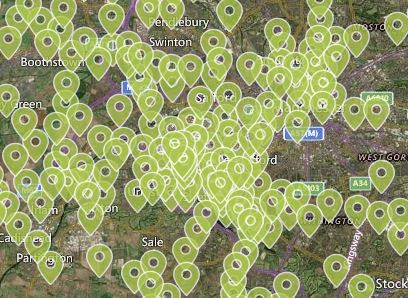

The other, more fun, thing was to wonder how many times I've got all the birds from a particular family on the British List. And how many I've got none. For the rules of the game I decided to omit the bird families which just had one representative on the List (like hoopoe, or wren, or long-tailed tit). I'm a little surprised to find I've actually managed to see all the grebes and true titmice on the British List. There aren't any surprises in the "not seen" list, half of them I've seen elsewhere but not in the UK.

  • Nightjars
  • Bustards
  • Coursers & pratincoles
  • Albatrosses
  • Storks
  • Frigatebirds
  • Tropicbirds
  • Bee-eaters
  • Tyrant flycatchers
  • Vireos
  • Mockingbirds & thrashers
  • New World warblers
  • Tanagers

Thursday, 8 October 2020

Stretford and Sale

Grey heron, Sale Water Park

I was going to have a long walk today but took an age to get my act together and ended up going for a wander round Stretford Meadows and over to Sale Water Park.

Stretford Meadows seemed very quiet but when I looked at my notes there was a fair variety about. I expect the impression's gained by the complete absence of warblers. The most obvious birds were the robins singing from every thicket, the squadrons of woodpigeons flying overhead and the group of six carrion crows bouncing about the tops. Half a dozen magpies rummaged around in the trees by the cricket pitch and a jay was busy collecting acorns.

Stretford Meadows

I scared up a party of half a dozen meadow pipits. Two of the birds came back and puzzled me by landing in a hawthorn bush to feed amongst the top branches like leaf warblers. They were spooked a couple of times by magpies, and again by a passing kestrel, but kept returning to feed on the branches. Try as I might I couldn't turn them into anything other than meadow pipits behaving in a most un-meadow pipit-like way.

Kickety Brook was frustrating: I could hear a mixed tit flock but couldn't find where it was. Starlings congregating on the electricity pylons by the motorway were harbingers of Winter.

I had more luck finding the mixed tit flock by the path from Stretford Ees down to the bridge over the river: the long-tailed tits flew over to check me out before returning to their gleaning and foraging with the great tits and coal tits.

River Mersey

The river was in full spate, the only birds were a couple of overflying magpies.

Sale Water Park was fairly quiet, possibly due to the canoeing class going on over on the other side of the lake. A couple of dozen black-headed gulls and a lesser black-back loafed in the middle of the water while the swans, Canada geese and coots lurked by the margins near the reeds. Oddly, the only mallards on the lake were two farm ducks. A heron sat on the island next to the end of Cow Lane.

Half a dozen mallards were on the "teal pool" on Broad Ees Dole with a couple of dabchicks. The pool by the hide was busier with a dozen gadwall, half a dozen each of dabchick and coot, a few moorhens and a couple of wigeon. Five herons loafed on the big island.

Adult and juvenile dabchicks, Broad Ees Dole

I wandered over to the café (too late for a cup of tea) and sat on the bench to watch the feeding station for a while. The great tits tried to monopolise as usual but the were displaced by half a dozen magpies which made a right Horlicks of trying to raid the fat feeders. In the end they gave up, except one that was canny enough to realise that the tits dislodged almost as much food as they ate. Which worked a couple of times but seeing as every time it turned up the tits were spooked and disappeared it soon got browned off and flew off to join its mates in the next field. Great tits, blue tits, coal tits and a nuthatch but no willow tit again today.

As I waited for the bus home by the Barlow Moor Road tram stop I counted 374 jackdaws flying over to roost over at Hardy Farm, mostly in flocks of six to a dozen but including a couple of forty-plus flocks.


Hoopoe


Hoopoe, Collingham

I thought the one-way system round Leeds was hard work but it turns out that trying to find your bus in the city centre is harder work. Despite arriving with twenty minutes to spare for the intended bus I not only missed it, I only just managed to catch the one that runs half an hour later. The stop that Google Maps sent me to in its directions wasn't in use. The one it sent me to when I searched for the bus route had a notice saying that the bus was now running from the stop I first went to. West Yorkshire Travel's web site said the stop was at the station (it wasn't). It turns out the best way to catch the X99 is to see it on the road, run after it and catch it up when the driver's having a minute to stretch his legs. (The correct stop is P7 on Boar Road, a block away from the station.)

Anyway, the hoopoe at Collingham Cricket Club was both a lifer and a delight. I got off the bus and walked over to the pelican crossing and wondered why there was a crowd of people pointing cameras at the traffic light. The hoopoe was in the tree by the pelican crossing. I walked round into the cricket club to get a better view without a lot of foliage in the way. The bird carried on preening for quarter of an hour then flew down onto the cricket outfield to feed. 


I was a bit worried about how close some people got to the hoopoe but I soon became more relaxed about it as the bird was so intent on making inroads on the chafer grubs and wireworms that not only didn't it care that people were close, it moved in closer to them. 

Hoopoe and hoopoe watcher

While I was waiting for the bus back to Leeds I had a quick wander in the wood by the river.

Comma butterfly


Monday, 5 October 2020

Elton Reservoir

First-Winter great crested grebe, Elton Reservoir

It was a nice morning so I thought I'd go over to Elton Reservoir for a walk. Getting over there's very straightforward but today was one of those days so the train into Manchester was stuck at signals for quarter of an hour after a freight train broke down at Oxford Road then the tram up to Bury broke down halfway there. I decided to get off the next tram at Radcliffe and walk up the canal to the Reservoir, just in case anything else happened.

Bolton and Bury Canal
The last time I walked down the canal it was very quiet. Not so this time, the fields over on the other side were full of Canada geese and black-headed gulls, the mallards and moorhens fed on the canal and the hawthorns along the towpath were full of robins and mixed tit flocks. A couple of skylarks and pied wagtails flew over and a heron was fishing among the reeds.

Sleepy teal, by the Bolton & Bury Canal
There had been weekend reports of a bar-tailed godwit and another report first thing this morning. I kept an eye out for it as I've had no luck seeing one this year, and I didn't have any luck today. No sign in any of the flooded fields and the little pool that's featured in some of the weekend's photos had plenty of teal but no barwit. Ah well, I'll have to have a trip to the seaside before year's end.

It had been a lovely morning but the wind had picked up and was rolling in some filthy looking clouds. I walked up the lane to the reservoir and walked along the Southern margin.

There were plenty of coots and black-headed gulls about and the family of mute swans lurked over by the other shore. A handful of lesser black-backs and a couple of great black-backs were bathing in the middle of the water. As usual the great crested grebes fed close to this side, giving very nice views as they don't give a monkey's about passing walkers. The juveniles are coming into their first-Winter plumage now with russet sides and black-striped heads and necks, looking like extras from the fall of Robespierre.

Great crested grebe, Elton Reservoir
Further along there was a small raft of tufted ducks, busily preening their bellies, and a couple of dabchicks whinnied from the creek. Six or seven jays quietly flitted about collecting acorns (do they remember where each other bury their caches of acorns I wonder). About this time the rain started in earnest and there wasn't anything any nicer looking to be blown in so I decided to take the hint and not complete the circuit of the reservoir.

I walked down towards Ainsworth Road past an empty Withins Reservoir and horse paddocks full of magpies, jackdaws and black-headed gulls. Then the bus into Bury and a circuitous journey back home in the rain.


Sunday, 4 October 2020

Local patch

Buzzard, Barton Clough

Another sunny Sunday so I decided to take my new boots for a walk around the local patch so we can start to get the hang of each other.

The park was phenomenally quiet, both of birds and people. Just half a dozen starlings and three wrens having a singing contest over the bit of bramble by the trees on the North boundary.

Buzzard, Barton Clough

As I walked onto the old cornfield I saw two buzzards flying over Trafford Park towards the canal. As I turned into the old rail line a third buzzard rose from the copse behind the school, spiralled upwards on the thermals and floated off towards the Trafford Centre. And that was pretty much it, really.

Rosebay willowherb, Barton Clough

  • Black-headed Gull 3
  • Blackbird 2
  • Buzzard 3
  • Carrion Crow 1
  • Dunnock 1
  • Feral Pigeon 28
  • Goldfinch 3
  • Lesser Black-backed Gull 2
  • Magpie 8
  • Pied Wagtail 1
  • Robin 1
  • Starling 1
  • Woodpigeon 7
  • Wren 3

I had something to do in Altrincham so I went over to the Trafford Centre for the 247 bus which goes round the houses through Davyhulme and Flixton, through Carrington, in a big circle round Partington then on to Broadheath and Altrincham through the farmland and mosses skirting Warburton and Carrington Moss. Lots of starlings, woodpigeons and pigeons in the urban areas, a big flock of rooks by Sinderland Brook and three whooper swans a field away off Sunderland Road. Guess it might be Autumn.

Saturday, 3 October 2020

Damp

Long-tailed tit

The new walking boots arrived this lunchtime and I'm like a kid wanting to play with the new toy even before it's out of the box. It's only raining a bit. Well a lot. Well, it's absolutely persisting down. But new boots… So I christened them by going to the shop for a loaf of bread and got wet enough for any Saturday.

I'll have to go shopping for bird food this weekend, the feeders have been hammered lately. The giant pine cones are a definite hit with the birds, and with me because they're a good way of providing fat food without it disintegrating in the rain within a day or two. I'm getting a dozen sparrows in each lunchtime, usually accompanied by one of the blue tits.  The tit flock is harder to connect with, they come into the garden like ninjas. Today I caught six of the long-tailed tits as they worked their way through the blackcurrant bushes, had a quick go at a couple of the pine cones and then disappeared deep into the roses.

Long-tailed tit

The blackbirds are still fighting over the rowan tree. The woodpigeons have given up on them; they, like me, have concluded the berries are past their best.

Thursday, 1 October 2020

Fylde

Juvenile pectoral sandpiper, Moss Side
I don't know about you but these days of alternating January and August are getting a bit confusing. Today started cloudy but promised sunny and, seeing as I spent yesterday sightseeing from the comfort of a surprisingly warm, dry train, I thought I should go for a wander. I wanted to give the boots one last outing before I sail them out to their final rest down the canal on a flaming longship.

Plan A was scuppered when I got news the birds had flown and it was too late for the simple connection to Carnforth to see if yesterday's ring-necked duck was still around. So I decided to try my luck with the pectoral sandpipers just outside Lytham. Partly because the location looked very doable by public transport, partly because I don't know that area at all, and partly because it would be nice to see a couple of pectoral sandpipers.

I got the Blackpool South train from Preston and got off at Moss Side. The reports had the sandpipers off Peg's Lane, which is about quarter of a mile down the road from the station so off I toddled. It's an easy walk: there's a footpath down one side of the road.

The hedges in the village were full of robins and great tits and there were dozens of woodpigeons and jackdaws in the fields. Just after the road turns South towards Saltcotes there's a little pond surrounded by trees and filled with the sound of mallards. The stubble field by the pond was busy with woodpigeons and feral pigeons, half of which took flight when a kestrel flew over.

Just before Peg's Lane I got to a field of cattle. There were a few dips and hollows where big muddy puddles had accumulated so I decided to have a look for any wagtails before moseying down the lane for the waders. There weren't any but I did notice a couple standing by the hedge further down the road staring at the same field through a telescope. I followed where they were looking and found one of the pectoral sandpipers, a quick scan to the left and there was the other.

Juvenile pectoral sandpiper, Moss Side
The problem with seeing these on their own was getting a sense of scale. The bright, pale shoulder braces reminded me of juvenile little stints then I started to wonder if I'd got the ID right. They looked just like little stints, except for the long bills and the streaky breasts and the yellow legs and… OK, they were pectoral sandpipers. I was hoping to get the sighting of a little stint as well as they've been reported from here and I've had no luck with them the past couple of years. And no luck today, either. I did have more luck finding three green sandpipers in the big puddle on the other side of the field.

I didn't see a lot of mileage in staying much longer so wandered back for the next train, which turned out to be going back to Preston. The train to Carnforth left Preston two minutes before we arrived and I didn't want to go straight home so I decided to get a bit of mileage from my old man's explorer ticket and went back the long way via Blackburn and Bolton.

A typical peculiarity of Autumn birdwatching when anything can be anywhere: two sandpipers that should be on their way to the Caribbean feeding in a puddle in a random field of cows in Lancashire.