Black-tailed godwits, Leighton Moss

Friday, 13 September 2019

High Rid Reservoir

High Rid Reservoir
A nice wander round High Rid Reservoir over in Horwich. For an unwooded, rectangular pool of water there was a lot on. Flocks of swallows, house martins and sand martins took their turns hawking for insects over the water. A mixed flock of over forty meadow pipits, thirty-odd pied wagtails (plus one nice female white wagtail) and a dozen grey wagtails chased each other round the edges of the reservoir and there was a flock of nine dabchicks out in the water.

Grey wagtail
Pied wagtail
Pied wagtail, the same bird as above but slightly different light
Pied wagtails
I'd gone in the hope of bumping into the little gull that's been hanging round for the past few days. As I arrived a pair of buzzards flying overhead put the scare into the gulls on the water and my heart sank as they all took off. Then I cheered up as they settled back down and a tiny white figure became obvious: a first-Summer little gull. A lovely bird.

Little gull
Little gull
Little gull
Little gull
Little gull
There was a commotion over in one of the fields by the reservoir. A merlin was desperately trying to concentrate on the business of catching a meadow pipit while being mobbed by a gang of angry jackdaws.
Meadow pipit

High Rid Reservoir


Monday, 9 September 2019

Crossens and Marshside

A visit to Crossens and Marshside in the pouring rain. It seemed to have eased when I arrived at Southport but once I got off the bus at Crossens roundabout the Heavens opened.

Crossens Inner Marsh in the rain
Mostly Canada geese with a few greylags and a domestic white goose
Definitely Autumn, and not just the weather. Crossens Inner Marsh was covered in Canada geese and greylags and the first few golden plovers were included in the flock of black-tailed godwits, starlings and lapwings put up by a kestrel. There were a few dozen pink-footed geese in Crossens Outer Marsh and a few hundred more in Suttons Marsh in Marshside. No sign of the red-breasted goose reported yesterday; I hadn't held out much hope for it, at this time of year the pink-footed geese see the Ribble Estuary as a transport café rather than a destination. Still, you live in hope.

Pink-footed geese, Marshside
At least two ruddy shelducks were still on at Marshside and there were five cattle egrets over at Nels Hide. Two of the egrets were juveniles, they must be breeding somewhere local, surely?

Ruddy shelduck, Marshside
Cattle egrets, Marshside
Cattle egret doing like it says on the tin, Marshside
Huge numbers of swallows passed through and there was a nice male wheatear at the Sandgrounders Hide.

Wheatear, Marshside
Teal and a shoveler, Marshside


Friday, 6 September 2019

New Brighton

New Brighton beach
Four hours' seawatching at New Brighton in a frisky wind in Autumn. I should know better at my age and I loved every minute. The hope was to see some Leach's petrels, which are a local speciality in September.

In the event it was a quiet afternoon and most of the seabirds were cormorants and lesser black-backed gulls. I managed to see one Leach's petrel about two hundred yards out but none in the mouth of the Mersey. A few gannets were caught by a shaft of sunlight about a mile out. About half an hour later a dark Arctic skua passed by about halfway out, flying out towards the Crosby shore.

There were, inevitably, a lot of "I wonder what that was" birds out there. One of them was quite striking but baffling and stuck around long enough for me to take some notes.
? distant, low. smaller than lesser black-back, perhaps common gull length but more stretched out. dark but not uniform. cold and scaly like lesser black-back, no white patches or bands, dark trailing edge to wings. paler (not white) underside and underwings. sharp, long wings. back end not gull-like, more like collared dove shape, lot of tail but blunt.
Having checked my reference books I think this is an immature long-tailed skua.

A handful of sandwich terns came in and dived for fish in the surf.

Sandwich tern, New Brighton
I spent quarter of an hour trying to identify a dark blob bobbing like a cork in the surf. I was sure it was an auk of some type but it was an unidentifiable rear end until it finally came level with me. It was a guillemot having a bit of trouble battling with the tide. Eventually it took a breather on the beach then had another go at it and struck lucky with a back surge and got back out to the sea.

Guillemot, New Brighton

Guillemot, New Brighton

Guillemot, New Brighton
Stopping off for a pizza on the way back to the station I checked out the waders on the deck in the marine lake. Plenty of turnstones and a few redshanks. It's a lot early yet to be expecting any purple sandpipers.

Turnstones, New Brighton

Wednesday, 4 September 2019

Railway journeys: the Exe Estuary from Exeter to Dawlish

Sketch map: Exe Estuary
This is probably my favourite stretch of railway in this country, and certainly the best for birdwatching from the train.

The view from Exton Station
The service runs from Exmouth to Paignton, working its way along the coast from Exmouth to Lympstone then along the seawall to the River Clyst just past Exton, along the back of Bowling Green Marsh then, turning inland through Topsham then via the Exeter stations, south alongside the Exminster marshes then along the seawall past Starcross, through Dawlish Warren and Dawlish then bobbing back inland through Teignmouth and onward to Torbay. The insane thing is that thanks to Dr. Beeching that stretch of sea wall is the only rail connection to England West of Dartmoor.

Railway and seawall going from Langstone Rock to Dawlish
After the train leaves Exeter St. Thomas the line runs roughly parallel to the Exeter Canal and the River Exe and out into open marshy countryside. Back in the old days the pools and creeks along this stretch were the first hints that you might strike lucky and see your first little egret of the year. They still have their fair share of little egrets, and herons and Canada geese. Pretty soon the marsh land thins and the river widens and the railway line becomes the Western edge of the estuary.

Exe Estuary at Starcross
This journey's particularly rewarding in Autumn, Winter and early Spring when huge flocks of waders and wildfowl settle in the estuary. You'll need to sit by a window on the left-hand side to get the best of it.

At low tide the mud is peppered by distant dark shapes that usually turn out to be redshanks, oystercatchers and curlews and you may also see a few flocks of brent geese. At high tide the waders huddle by the railway line, the geese tend to stay out in the main channels of the river. Past Starcross you start to see more black-tailed godwits, dunlins and wigeon. If you're lucky you may get a close view of the regular wintering Slavonian grebe. As the train approaches Dawlish Warren the line runs by the side of the bight, then through a bit of salt marsh, alongside the golf club and into the station.

Oystercatchers, Dawlish Warren bight
Note the white-headed individual at the back
Brent geese, Dawlish Warren bight
Dawlish Warren is worth a few hours' (or even a few days') wandering round. It's a spit jutting about a mile into the mouth of the estuary. A large part of the northern side is a golf course, the rest of the Warren is a mixture of open heath and dunes with some small patches of light woodland at the landward end. The bight on the northern side is great for wintering geese, waders and ducks. The beach on the southern side is great for waders and seawatching. And every shrub or patch of brambles could hold an interesting passage migrant. My list for Dawlish Warren is 114 species with highlights including Bonaparte's gull, Richard's pipit, Dartford warbler and Siberian chiffchaff.

Sanderlings, Dawlish Warren beach
Pulling out of the station the train turns away from the estuary, joins the seawall and goes past Langstone Rock on to Dawlish.

Langstone Rock
Langstone Rock
It's definitely worth keeping a close watch on the sea here at high tide: the gently sloping sand attracts flatfish which then attract shags, great-crested grebes and, if you're lucky a diver may come close. The mussel beds at the end of the rock attract eiders and scoters, with the occasional nice surprise. If the weather's not awful it's a nice walk from Dawlish Warren station along the seawall to Dawlish Warren and worth it for the seawatching. If the weather is awful, it's worth trying to find a bit of shelter (there's not a lot of it, all at the Dawlish Warren end) and dig in to see what gets blown by.

Red-throated diver, Dawlish Warren
Velvet scoter, Dawlish
From Dawlish the line goes on to Teignmouth and on to Torbay, terminating at Paignton.

Tuesday, 3 September 2019

Stretford

Stretford Meadows
Feeling tired and achy, and more than a bit guilty about having for the second day running had another lie-in rather than go out for the intended sea watch, I decided to try and walk it off. 

Started off with a stroll over Stretford Meadows. Forty years ago this was the local municipal tip, it's been capped and grown over since then. It's never spectacular birdwatching but often rewarding. 

Stretford Meadows with the M60 in the background
The weather today was unpromising to the point of being dreich. There were a couple of small tit flocks and plenty of magpies. A jay was very quietly collecting acorns by the path. Unusually, there were four (or five, I'm not sure whether or not the adult male had circled back when my back was turned) kestrels hunting over the open space.

Jay collecting acorns
Kestrel
I decided not to take the path down by Kickety Brook and then on to Stretford Ees and Sale Water Park. Instead I nipped past the cricket pitch (forgetting, as always, what a bloody horrible path this is) and got the bus over to Longford Park.

Both Longford Park and Rye Bank Fields were very quiet. A family party of five bullfinches flitting round the tree tops at the end of Rye Bank Road were the only unusual sighting.

Nuthatch, Longford Park

Monday, 2 September 2019

Pennington Flash

A rainy day kingfisher
A rain-filled afternoon over at Pennington Flash. The weather had a definite Autumn feel to it even though the sky above the Flash was filled with house martins, sand martins and swallows and five swifts hawked over the car park.

On the way in I took a detour round the south side of the Flash to check out the hedges for any passage migrants. There were a couple of mixed tit flocks, at least a dozen chiffchaffs and a couple of whitethroats, including one that looked as if it had had the rough end of a fight with a predator but managed to escape.

A rather battle-scarred whitethroat
1CY Lesser black-backed gull
Lesser black-backed gull
The "What the hell is that one?" phase of the gull-watching season is well in session. Amongst the large gulls there were plenty of lesser black-backed gulls of all ages and, eventually, I managed to spot a 1CY yellow-legged gull amongst the loafers at the far end of the spit.

A juvenile kingfisher made an appearance and sat on the usual dead branches in front of the Tom Edmondson Hide.

Kingfisher
Kingfisher
Dabchick
Blackcap
Mute swan
Willow tit
Always nice to see the car park oystercatcher

Sunday, 1 September 2019

Urban birding: Stretford

Barton Clough: a more honest photo of its rural beauty than my usual ones
The weather being suitably Autumnal I thought I'd nip over to Rye Bank Fields to see if there was any more evidence of passage migration (there had been reports of garden warbler and redstart over the past few days). In the event it was pretty quiet: even the jays were absent, the only evidence of passage migration being a female blackcap accompanying the mixed tit flock by Longford Stadium and sixteen swallows passing low overhead.

Long-tailed tit, Rye Bank Fields
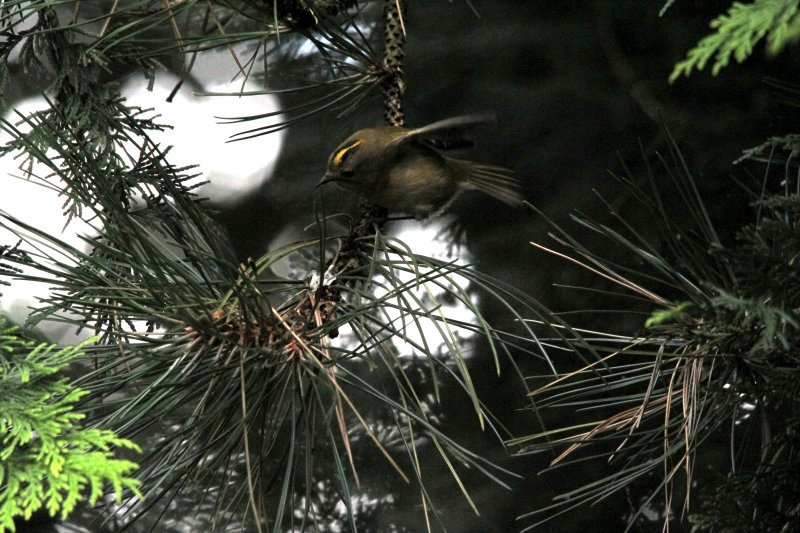
In Longford Park a couple of goldcrests showed very well in the conifer garden. Flitting about at close quarters as they were I've got a lot of photos of where they were a split second ago.

Goldcrest, Longford Park

Goldcrest, Longford Park
On the way back home I stopped by my local patch on the off-chance. A fairly quiet collection all told. The arrival of Autumn was heralded by the arrival of three common gulls on the school field. There were only a dozen goldfinches on the thistles, a considerable drop in numbers from last year. What would probably have been the bird of the day (but might well have been a male chaffinch) disappeared deep into a Pyrancanthus and out of sight.

Where do mistle thrushes go in August? This is the third year in a row that I have no records whatever in August then have one turn up on the first of September. Today — just to rub my nose in it — there were thirteen on the football pitch, quite an unusual number for this time of year.

Mistle thrushes, Lostock Park