Black-tailed godwits, Leighton Moss

Saturday, 19 September 2020

Mosses

Mayweeds, Chat Moss
A warm sunny Saturday and I wanted to avoid the crowds so I opted to go for a wander across Chat Moss, heading off West to Barton Moss for a change (I've not done this walk in ages). I made the mistake of starting to read a book when I was letting my breakfast settle so it was only once I'd finished it mid-afternoon that I set off.

It was a bright, mild afternoon but with a stiff wind which made birdwatching difficult — it's only when the wind rattles through my ears I realise how much I rely on my hearing small birds in hedgerows, and half the time the movements that caught my eye were falling leaves or passing dragonflies.

Cutnook Lane was mostly quiet birdwise, if it wasn't for the woodpigeons scattering each time somebody over on one of the farms fired a shotgun I wouldn't have seen anything at all before reaching the fishery. On the plus side there were lots of dragonflies, nearly all black darters with a handful of brown hawkers patrolling the roadside ditch.

I'd nearly arrived at the junction with Twelve Yards Road before I found anything in the hedgerows besides singing robins. A mixed tit flock with at least eight long-tailed tits accompanied by great and blue tits flitted across the lane. There were at least two other birds in there but they were directly between me and the sun and I lost them before being able to make any serious attempt at identification. The whole flock moved on quickly with the arrival of some loud walkers (the only such interruption of the afternoon). I'd moved to one side to let the walkers pass, a mistake as a gust of wind brought a shower of acorns on my head. ("An acorn falleth on my head. Discovereth not the law of gravity today. Went home.")

Twelve Yards Road
At the junction I turned right and walked on down towards Barton Moss Road. Unlike the walk down to Four Lanes bits of this stretch are lightly wooded and the hedgerows have mostly been superceded by maturing trees. On a less windy afternoon this would be quite rewarding, as it was the wind in the leaves even drowned out the noises of woodpigeons clattering out of the trees. There were a few chaffinches and great tits about but everything else was lying low. Plenty of dragonflies here too, mostly black darters again with migrant hawkers patrolling the last of the unharvested barley fields and a couple of common darters weaving round a patch of Himalayan balsam.

Buzzard hovering, Chat Moss
Out on the stubble fields there were scores of woodpigeons and a few carrion crows. Further out there was a buzzard hovering in the wind. Buzzards look ungainly when they're hovering but there's a subtlety to the way they work their wings which is nice to watch.

Chat Moss, approaching Barton Moss Lane
Then over the motorway and onto Barton Moss, pausing only to say hello to a daft friendly bulldog. At first I thought there were only a few woodpigeons and a small flock of rooks out in the stubble field to the west of the road but a mixed flock of small birds rose up above the high hedgerow halfway down. It took a while to unpick the throng: half a dozen each of swallow and house martin in a loose group that eventually floated over onto the aerodrome; a dozen or more each of goldfinch, meadow pipit and skylark. The pipits had a look of being a migrating party: the second time they rose up they carried on Southward. It would have been a bit more sporting if more of the birds had moved over across the lane so I didn't have to squint into the sun.

The stop for the bus back to the Trafford Centre is at the end of Barton Moss Lane so after ten minutes' wait I was back off home.

Thursday, 17 September 2020

Notlob

Male wheatear, High Rid Reservoir

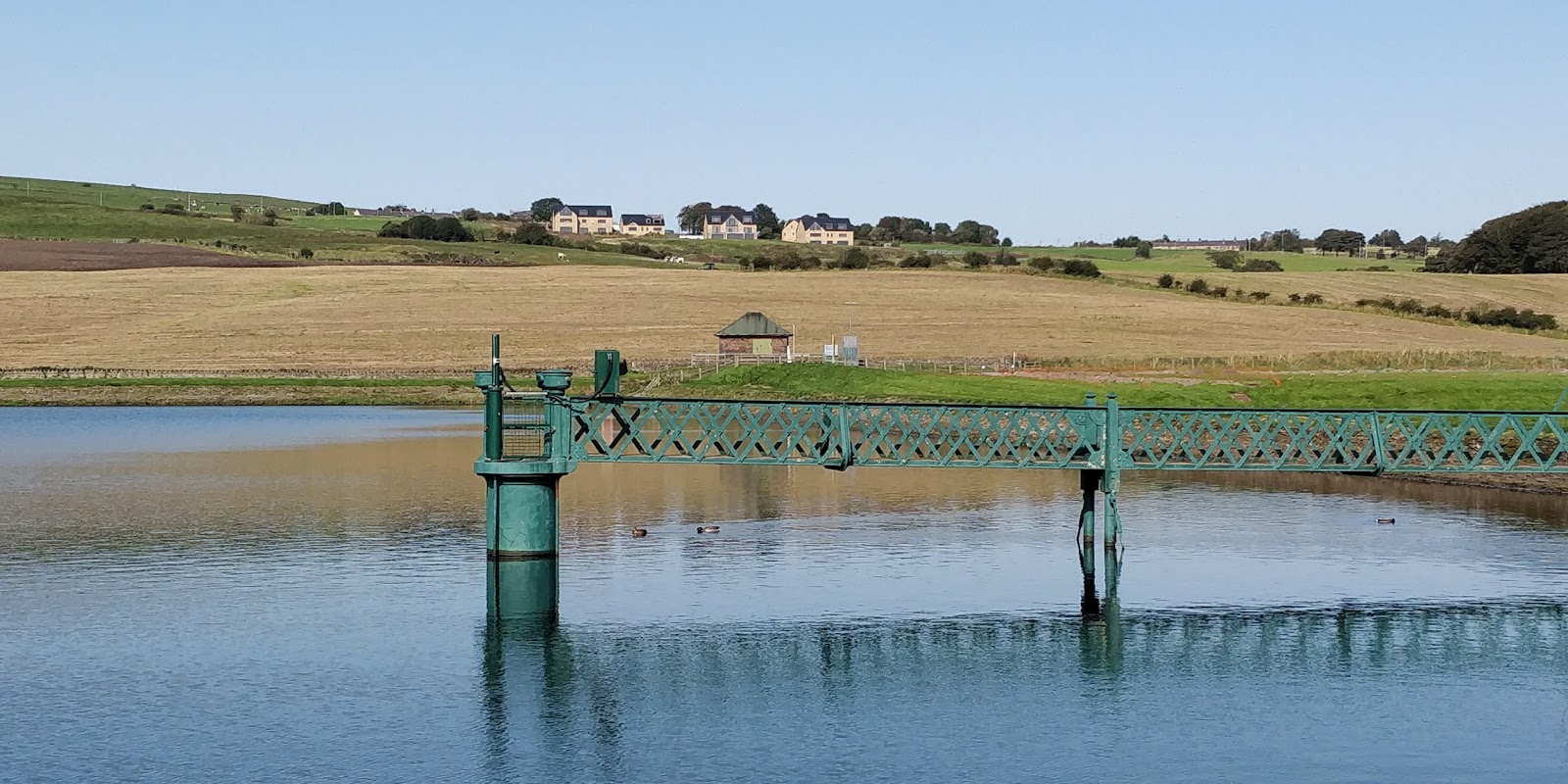
I'm trying to fit a lot of birdwatching in before last April's full lockdown gets reimposed but after taking yesterday off to listen to the cricket I'd lost momentum a bit and couldn't decide where to go or why. So I bobbed over to High Rid, partly to get me going somewhere, partly because I think it's underwatched and underreported, partly in the hope some of the passage migrants seen up on Winter Hill might drift across the road and save me a climb.

It was one of those September days where by lunchtime it was like a warm Summer's teatime and lit accordingly. The walk up Fall Birch Road was punctuated every twenty yards by robins.

Gulls following the plough

As I reached High Rid Reservoir I could see that there was a raft of gulls on the water and beyond that a couple of hundred gulls, jackdaws, rooks and carrion crows followed a tractor that was ploughing up a field of stubble. Most of the gulls were black-headed, with a few dozen lesser black-backs and a handful of herring gulls. I saw a common gull fly in as I was walking down the road but that was the only one I saw. A young buzzard flew in to the field expecting to get a free worm feast but a dozen jackdaws flying in close formation chased it off. Another buzzard soared over the field and drifted over towards Lostock, accidentally spooking a kestrel in the process.

A couple of dozen mallards dozed by the water's edge but there was just the one tufted duck on there. A couple of dabchicks bobbed up and down, careful not to get too close to any of the large gulls. A snipe flew over, circled the reservoir then headed East, the only wader of the day.

High Rid Reservoir
There were goldfinches and chiffchaffs in the trees by the reservoir and plenty of woodpigeons lumbering about. Linnets and meadow pipits fed in the remaining stubble in the field, it took me ages to find them even though I was hearing them all the time. It took even longer to find the skylarks.

Over by the sluice that becomes Bessy Brook a juvenile grey wagtail caught my eye. As I was watching it a couple of birds bobbed up and sat on the wall. A couple of wheatears, a male and a female type. The male was quite skittish, the other didn't mind my being there.

Wheatears, High Rid Reservoir

Wheatear, High Rid Reservoir

Wheatear, High Rid Reservoir

It had become a nice afternoon and I wasn't in any rush to get back to Bolton so I decided to carry on walking from the reservoir down Old Hall Road. It's a new walk for me and I found it very enjoyable. It starts off as a rough cobbled path by the golf course and eventually becomes a lane leading onto Old Kiln Lane. I stopped to watch a couple of goldcrests in a conifer. They were accompanied by a couple of finches I couldn't identify: not chaffinches because they were streaky, not siskins because they were too big and had warm brown breasts, and I couldn't get a good enough view of them to justify my identifying them as crossbills. A little further along I spent five minutes watching a dogfight between a jackdaw and a kestrel.

Jackdaw and kestrel

Jackdaw and kestrel

Jackdaw and kestrel

I got to the main road from Old Kiln Lane and decided to cross and carry on down to Doffcocker Lodge, a new site for me. I was surprised by its intimacy, it's almost people's back gardens. There were a couple of dozen each of tufted ducks and coots and a few mallard. A pair of great crested grebes had a couple of surprisingly young juveniles in tow.

Great crested grebe and young, Doffcocker Lodge

Tufted ducks, Doffcocker Lodge
A lot of Winter disappointment can be put down to looking at a possible scaup and finding a tufted duck lying on its back.

After half an hour's wander I got the bus into Bolton and got off home via a circuitous route because I've been getting bored of the train journey from Bolton to Salford Crescent.

Tuesday, 15 September 2020

Leighton Moss

Leighton Moss
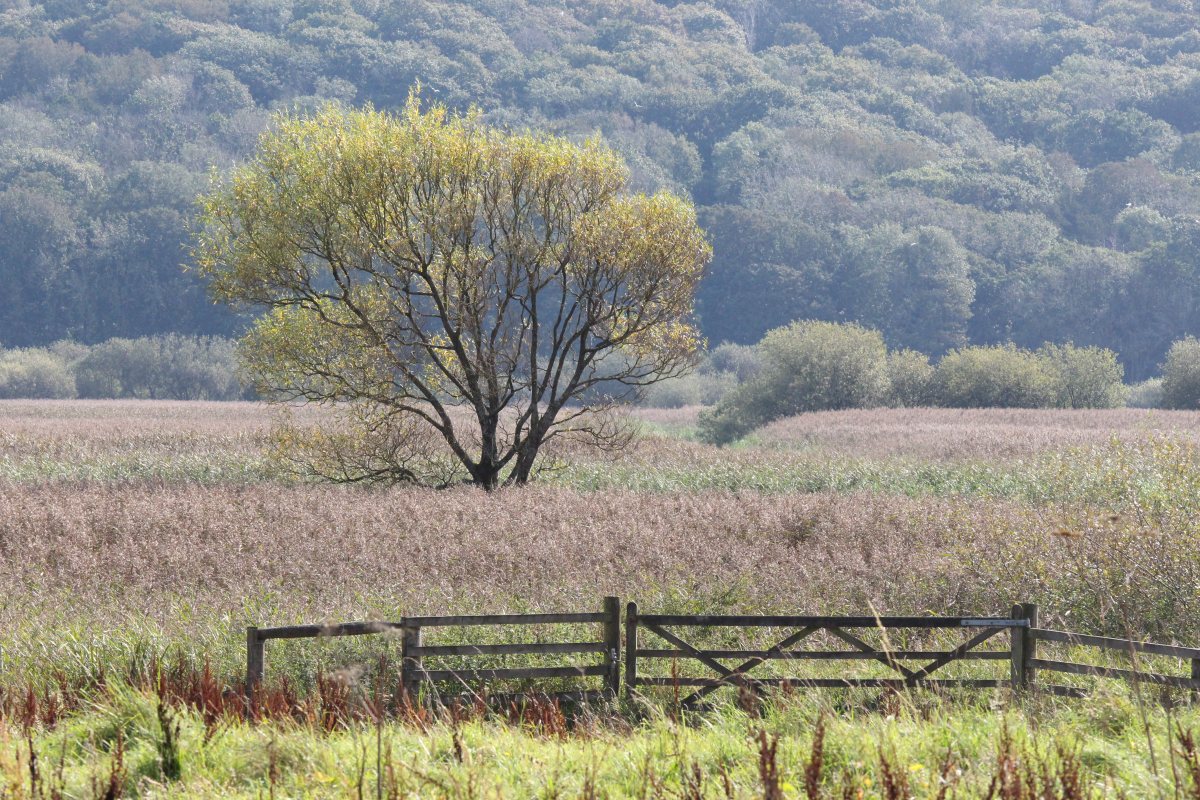
Leighton Moss is too stressful to be an enjoyable day's birdwatching though it's always a good day's birdwatching. Which is a shame because it's a damned good reserve and the staff and volunteers are great. I should have visited on a day where the weather was pretty awful. Never mind, it was a good day's birdwatching.

They've changed the train times again so there's just the one through train to Silverdale from Manchester, though the connections at Lancaster at other times look OK. The good news is that it's a through train to Carlisle so it's now feasible to have a day trip to Millom and have a wander round Hodbarrow though it's too late to catch the nesting Sandwich terns and little terns. It struck me the other day that it's a strange year when I see more Sabine's gulls than Sandwich terns.

As the train pulled into Silverdale Station I noticed that the marsh hides were now open. I thought about wandering down there but it's a long walk to find there's already the maximum number of people in the hide and it's not as if you can look out from a screen by the sides. It was tempting, though, as hide tide had pushed quite a lot of waders in, mostly redshanks and black-tailed godwits but there were smaller birds on the Allen pool. There were a couple of dozen little egrets on the Eric Morecambe pool and plenty more dotted about on the salt marsh beyond.

Although it was mid-morning it was picnic time at the "hideout" by the reserve entrance. Luckily the birds seem to have relearned to ignore people so there was plenty of activity at the feeders with chaffinches, titmice and nuthatches making most of the running. I was hoping to get marsh tit ticked off early here but none came in. It only occurred to me today that the house sparrows that live in the hedgerows around the visitor centre never visit the feeding stations. I have no idea why that's the case.

I had a look round from the sky tower. There were a lot more ducks on the pool in front of Lilian's Hide than last time. Surprisingly, most were gadwall although there were good numbers of mallard and a dozen shovelers; it took a while for me to find any teal, they were all resting well tucked into the bases of the reeds. A couple of juvenile Pochard were unexpected, it's usually been quite late in Autumn before I find them on this pool. As I was standing at the top of the tower a couple of Cetti's warblers were having a singing duel in the reeds at its feet.

A quick visit to Lilian's Hide confirmed what I saw from the tower and added four dabchicks to the tally. As I came out and wandered down the path one of the Cetti's started singing again so I had a go at recording it. I gave it up after three attempts due to human noise, including one group loudly discussing their sandwiches and then getting to the hide: "It says we have to wear masks." "We'll be alright." I suspect the people inside the hide pointed out they wouldn't be alright as five minutes later they trumpeted past while I was trying to photograph blackcaps eating elderberries.

I had a bit more luck recording a Cetti's warbler on the boardwalk leading to the public causeway.


Walking down the causeway I bumped into the only marsh tit of the day, one of a small mixed flock working its way down through the willow saplings on the right. And another couple of duelling Cetti's warblers. Two buzzards were calling and soaring together over the hill and a third was soaring high over Silverdale village.

There was room in the Causeway Hide so I spent ten minutes having a look round. There were a lot of mallard and coot on the water, with shovelers and teal tending to congregate near the reed margins. A dozen wigeon fed behind the little island, a couple of females and ten males in eclipse plumage. A group of cormorants were resting on the island, extending their throat pouches and panting in the unseasonably warm sunshine. Another Cetti's warbler flew across the front of the hide, the fifth of the day. The same, or possibly a sixth, bird was singing from the opposite side of the path when I left the hide.

Cormorants panting in the heat
I'd already encountered a few common hawkers patrolling the reedbeds as I was walking down. There were more on this pool, as well as a couple of brown hawkers. There were also a few Southern hawkers, including some all-blue individuals. (The usual caveats apply to my identification of dragonflies I don't see regularly) [Update — I'm advised these were migrant hawkers] As I left the hide a couple of common darters flew from the reeds by the door.

Migrant Hawker
After a couple of hours I'd had enough. I decided to max out my old man's explorer ticket by getting the next train to Carlisle and seeing how far I could get and be able to come back and home before the cat reported me missing. As it was, I lost my nerve and got off at Millom, giving me nearly half an hour to spare for the next train to Lancaster. I didn't fancy waiting an hour at Lancaster for the Preston train (you either visit Lancaster properly or you try not to spend more than quarter of an hour on the station) so I got off at Arnside and mooched around admiring the Kent Estuary for an hour before getting the next train from Barrow.

The tide had receded by now and most of the estuary was sand littered with black-headed gulls, with a large flock of shelducks over the other side. A few lesser black-backs picked about the sides of the creeks and more flew over out into the bay. A lone common gull spent it's time flitting between lamposts by the railway station.

Common gull, Arnside
Home from Preston via a circuitous route in the twilight, optimistically looking for owls hunting over rough fields and fish finger butties for tea.

Monday, 14 September 2020

Mosses

Kestrel, Irlam Moss
Seeing as today was scheduled to be hot and sunny I decided to have a morning walk on Irlam Moss. The plan was to walk up Astley Road from Irlam Station, have a look at Little Woolden Moss then either come back down New Moss Road into Irlam or head out for Glazebrook Station.

The hedgerows along Astley Road held a few tit flocks, one of them including a couple of goldcrests and a coal tit. Lots of young adult robins were putting markers down for Winter territories, one of which was given the bum's rush by a pair of adults who flew over the road from feeding in a nettle patch to see off the interloper. A couple of yellowhammers flitted from a hawthorn hedge into a stubble field.

Three male kestrels each kept watch over their field of barley stubble, two of them choosing a telegraph wire as a perch, the third sitting high in a tree.

Across the turf fields near the motorway there was a flock of a couple of dozen lesser black-backs. I was puzzled by the flock of twenty-odd corvids halfway between the gulls and the road. At first I thought they must be rooks but none had white faces. Perhaps it was a flock of juvenile rooks? No, it was a gathering of four or five carrion crow family groups. Why, I don't know, I can't think there was a big enough corpse on the field to get them all in. A raven came in just to add to the mix and was escorted away by three of the crows.

Just over the motorway a freshly-ploughed field held forty-odd lapwings and a few woodpigeons. The approach to Four Lanes End was pretty quiet, just a couple of pied wagtails and a meadow pipit.

Little Woolden Moss was pretty quiet on birds today but absolutely heaving with dragonflies, mostly black darters and common darters with quite a few common hawkers.

Black darters, Little Woolden Moss
Female black darter, Little Woolden Moss
Common darter, Little Woolden Moss

I counted four chiffchaffs in the birches, including a singing male. Odd ones and twos of goldfinch, linnet and meadow pipit flew over. The only bird on the water at the Eastern end of the moss was a full-grown juvenile moorhen.

Over at the Western end the most obvious was the large flock of gulls — black-headed and lesser black-backs — and rooks circling over one of the fields across by Holcombe Lane. A smaller flock — a couple of dozen each of black-headed and lesser black-backs — loafed on a pool in the moss, accompanied by a few pied wagtails. Something set them off and they all flew up, with only the black-headed gulls coming back down to the ground.

I wasn't having any luck finding any waders and had decided there were none to be found when three ringed plovers, two adults and a juvenile, bobbed up from behind one of the bunds. A few minutes later I thought I'd spotted an unusually pale small sandpiper on the mud but it turned out to be a pied wagtail that had lost its tail.

A flock of swallows flew in for a drink. As I was watching them a couple more juvenile pied wagtails flew in. Except one of them wasn't. It was extremely pale grey above with a paler grey crown and pure white below. A definite juvenile white wagtail. I tried to get some photos but the contrast between an almost-white wagtail and an almost black peat bund in strong sunlight meant the results all look like Victorian spirit photos of the late departed.

Black-headed gulls, Little Woolden Moss
I'd been keeping tabs on the train times (there had been some disruption due to an accident on the line early on). The next scheduled train from Glazebrook would have been due in forty minutes, which would have been a push to manage (especially as I'd not walked this route before). As it happened, that was cancelled and replaced by one giving me an hour and twenty minutes, which turned out to be more than plenty. Once i reached Holcombe Lane it was a dead straight walk down. And on the way I found the end of the lane I should have gone down last time when instead I wandered round Cadishead Moss.

By now the early afternoon sun was asserting itself so I decided to call it quits and go and have a cup of tea and finish catching up with yesterday's cricket.

Sunday, 13 September 2020

Home thoughts

We're in that phase of the year when there's plenty of food about, the breeding season's over (not necessarily a given with the sparrows and goldfinches) and most of the birds are just dropping into the feeding stations for breakfast and supper. There are days when I don't see the sparrows, they'll have done a hit and run visit while I've not been looking. Ironically, the best way for me to get to see them is to leave the feeders empty, they'll queue up on the garden fence to let me know about it.

I've been worrying about rooks lately, which sounds daft once I've written it down. There have been days when I've only seen one or two on the school playing field, which ordinarily I'd not worry about but it fits into a bigger picture in seeing. When I'm out and about I'm seeing fields of post-harvest stubble that have plenty of woodpigeons, even family parties of carrion crows, but no rooks. Fields where I'd routinely see flocks of dozens this time of year have none. Where have they gone? Are pickings so thin they've had to disperse? Is there a new, distant food source that's irresistible? Has there been a population crash? I don't know. What I do know is that I've seen very few crane flies this year so I'm wondering if that's part of what's going on. I can't imagine that this year, uniquely, the rooks have eaten them all so I'm guessing that something — the weather? — has affected the survival rates at the leatherjacket phase and if that's happened perhaps it's also affected over burrowing insects.

Saturday, 12 September 2020

Hale and home

Dunnock, Stretford
 I've been on a twitch. On a Saturday. Yes, really. On a whim I decided to go over to Hale in Merseyside to have a look for the juvenile Sabine's gull that's been there the past few days.

Starlings, Hale Lighthouse
Checking out the travel plan it looked very straightforward: train from my local station to Liverpool South Parkway and a 500 bus ride to Hale. And so it wasn't. I'd been waiting an hour and watched three 500 departures appear and disappear from the boarding screen when I asked a bus driver: "Is the 500 running today?" No. And not any day. I was less than entirely gruntled. Anyway, it turns out the journey is dead straightforward so long as you ignore the information provided by Merseytravel. An 86A to John Lennon Airport then an 82A to Hale Village Green.

I walked down Church End and down to the lighthouse. The field by the lighthouse was full of black-headed gulls, plus a few juvenile lesser black-backs, all following a tractor as it harrowed the freshly-manured ground. I checked them all out, just in case, but didn't see anything that might be a Sabine's.

Black-headed gulls, Hale
A couple of birders stopped and told me the gull was on the river and showing well so I joined the coastal path and walked down to where a small group were scanning the river. As I approached they all turned round and started looking at the field. The tractor driver had stopped for a break and the gulls that had been loafing on the shore flew in to join the ones I'd been watching earlier.

Scan as I might I had no joy. Most of the others moved back up the path to try their luck there, leaving two of us behind. Just as well, really as the gulls flew back our way and back onto the river. "Closest to us!" shouted the other chap. And he was right, there it was: my first Sabine's gull. A brief sight of it but unmistakable: small, smutty grey-brown back, browner wing coverts, jet black outer primaries and a ginormous triangle of white secondaries and inner primaries. Lovely.

I spent a while trying, and failing, to pick the bird up on the river. Walking back I had another look at the gulls from my original viewpoint. And lo and behold, distant but conspicuous, up bobbed the Sabine's again. A longer view this time before it settled back down on the field behind the black-headed gulls. A very nice bird.

The original plan had been to move on to another site for an hour or so's birding but after all the delays and whatnot I decided to call it quits and get off home.

Back home, pot of tea to hand, I was delighted to see yet another very young goldfinch on the feeder. It must have been very young as the parents were still prepared to feed it (give it a couple of days and it'll have to get its own meals). The goldfinches were joined by a dunnock and a robin, the robin feeding from one of the giant suet-filled pine cones and the dunnock picking up the bits from under the feeder.

Juvenile goldfinch, Stretford

Thursday, 10 September 2020

Blackleach Country Park

Mute swan
I was feeling a bit low energy today so shelved the planned long walk around the mosses. I'll probably do that this weekend. I decided I still needed a short walk so I took the bus over to Blackleach Country Park in Walkden. It's been ages since I last visited, it's at its best in late Spring and early Summer but you never know your luck anywhere this time of year. Walking up from the bus stop I stopped to watch a magpie chasing a sparrowhawk across the road, which was a good start.

Black-headed gulls
The most obvious birds on the reservoir were the black-headed gulls and coots. The gulls congregated on the nesting rafts to loaf while the coots were scattered all about. There were a couple of dozen mallard about, together with a similar number of Canada geese and a pair of gadwall. I could only find the one tufted duck, I should have expected more. Just the one great crested grebe, too. I was watching a family party of mute swans — a pair and seven full grown cygnets — when I heard an odd croaking noise. I looked around, half assuming it was coming from one of the coots when I glanced up and saw two ravens, an adult and a very noisy juvenile, fly over. I'd been so busy trying to work out what the noise was and where it was coming from I missed the chance of getting a photo.

Further along, by the wooden jetty which is a few weeks shy of being condemned as unsafe, there was a kerfuffle as a couple of moorhens objected to a couple of brown rats swimming by.

I took the the path through the woodland that takes you to the M61. Rather than going over the bridge to Kearsley I followed the path round to the North side of the reservoir. The first stretch was very quiet, just a few wrens and robins, and it was only when I got to the motorway I bumped into the first mixed tit flock. It was a challenge picking up the birds' contact calls over the traffic noise but I found a couple of great tits, ha blue tit and a chiffchaff. While I was looking round a buzzard slowly floated overhead and off towards the more open ground to the East.

Further along, where the path ran beside the work on a new housing development, I picked up a second flock. This was quite a bit bigger: half a dozen blue tits, a few great tits and chaffinches and another chiffchaff. A couple of swallows gave alarm calls so I scanned the sky for birds of prey, found none and concluded they were objecting to me. A juvenile bullfinch was hard work to find as it wistfully squeaked in the depths of a hawthorn (at first I was sure it was machine noises from the building site). A short, deep churr in a hedgerow might have been a willow tit or possibly yet another in the repertoire of great tit noises, it was brief and just the once and the bird was in deep cover so I couldn't confirm it one way or another.


Just as was leaving I bumped into the first and only dragonfly of the day, a common hawker, as it patrolled the woodland margin by the reservoir.