Black-tailed godwits, Leighton Moss

Friday, 9 December 2022

Home thoughts

Collared dove

Another cold day started with an invasion of the back garden by spadgers and the only time they were absent was when I went out to refill the feeders and hang up a couple of new fat-covered pine cones. I struck lucky and found a couple of ginormous ones in the shop so they may last a few days. I missed the blue tits today, the first time for weeks. One of them's a perpetual camp follower to the tawny spadgers, I probably missed it in the crowd. The coal tits prefer to avoid the crowds and come to the feeder close to the window but you could blink and miss it when one visits. It still feels odd to be surprised and delighted when a woodpigeon calls round.

  • 1 Black-headed gull overhead
  • 1 Coal tit
  • 1 Collared dove
  • 2 Dunnocks
  • 2 Great tits
  • 1 Herring gull overhead
  • 19 House sparrows
  • 2 Magpiea
  • 2 Starlings
  • 1 Woodpigeon

It was a hard frost on the school playing field so there were only large gulls on there in the morning. Three herring gulls stuck around but a lesser black-back didn't linger. This Winter, for the first time, herring gulls have very much outnumbered lesser black-backs on here. By lunchtime the third of the field closest to the school had thawed enough for a few black-headed gulls to drift in with the jackdaws.

I had some errands to run in Urmston. There were plenty of pigeons about, as usual, but nothing else. Even the usual spadgers and magpies were t around at the station. I hope they'd found somewhere warm.

The weather forecast is promising marginally warmer but a lot wetter or even snowy over the weekend before another cold blast. I'll have to fight the temptation to hibernate!


Wednesday, 7 December 2022

Mersey Valley

Mute swan, Sale Water Park

It was the first proper cold day of Winter and the frost lingered all day in the shade. I decided on a walk from Stretford Meadows to wherever to take advantage of a crisp sunny day where the golden hour lasted all afternoon.

There were six lesser black-backs perched on the rooves of the houses near the garden centre on Newcroft Road. I don't know if they were killing time before moving on to the school playing fields down the road or had followed the Christmas tree lorry on spec. The house sparrows in the hedgerow at the bottom of the road were particularly noisy, as were some passing crows. Perhaps I'd missed all the fun.

Stretford Meadows 

The frozen ground made the paths less messy than they would have been yesterday though here and there it was obvious there was only a thin crust of frozen mud to put your trust in. Great tits and blackbirds fidgeted around in the trees, a mistle thrush rattled from somewhere in a conifer and a couple of dozen goldfinches bounced around the treetops. It was quiet out in the open, save the usual mischief of magpies. The meadow pipits were keeping deep undercover in the willowherb thickets and a pair of greenfinches did a tour of duty of the hawthorn bushes at the top of the rise. There was more going on around the margins with woodpigeons barrelling around in the trees and a couple of parakeets making a racket as well as some more blackbirds and crows.

The downside to the thaw on the sunny slopes became apparent as I descended the summit. For once I was relieved to safely get down to the Transpennine Trail and was rewarded by a song thrush and a few long-tailed tits foraging in one of the hawthorn bushes.

Mist over Kickety Brook 

The walk along Kickety Brook was relatively quiet, for the first half I only saw a couple of magpies and rather a lot of squirrels in the throes of romantic passion. I was compensated by the scenery and lighting and a mist rising from the brook. I was coming to the conclusion that it was going to be magpies all the way when I bumped into a very loosely organised mixed tit flock with blue tits, great tits, a few goldfinches and chaffinches and a female bullfinch.

Blue tit drying off after a bath in Kickety Brook

Stretford Ees 

At Stretford Ees I had a nosy on the open field to see if any stonechats had moved in yet. No luck today but looking at the weather forecast they'll be along soon. A heron stalked the frosted grass and a sparrowhawk was chased into the cemetery by a couple of carrion crows. 

Mallards, mute swans and black-headed gulls, Sale Water Park

Common gull (centre) and black-headed gulls, Sale Water Park

I bobbed over the river to Sale Water Park. There was about a hundred gulls on this side of the lake, mostly black-headed with a few common gulls and lesser black-backs. The mute swans were feeding near the banks with the coots and mallards, I noticed there weren't many Canada geese about. There's been an outbreak of avian flu here and they've been the primary casualties. There was just the one great crested grebe, a stripey first-Winter, but plenty of dabchicks. It became clear why when I looked in at Broad Ees Dole where both main ponds were frozen. The drains were still free-floating, which gave a pair of teal somewhere to dabble. It took me a while to find the great spotted woodpecker calling in the trees.

Magpies and Canada goose carcasse, Broad Ees Dole

Teal, Broad Ees Dole

Dabchick, Sale Water Park

Robin, Sale Water Park

Further along the lake a family of long-tailed tits frolicked in the alders which had finally been laid bare by the overnight frost. Out on the water a dozen gadwall mingled with a large raft of coots and a single redhead goosander cruised the far bank.

Sale Ees 

There were more long-tailed tits in the trees in Sale Ees and ring-necked parakeets squawked in the treetops before moving on to the roost at Jackson's Boat. There were forty-odd parakeets already in the trees by the pub car park when I walked past at sunset.

Kestrel, Hardy Farm

Jackdaws, Hardy Farm

The bridge at Jackson's Boat seems at least as wobbly as it was before it was repaired. I walked through Hardy Farm in the dusk with jackdaws congregating in the trees and a kestrel having one last look around before going to roost. A nice end to a good walk.

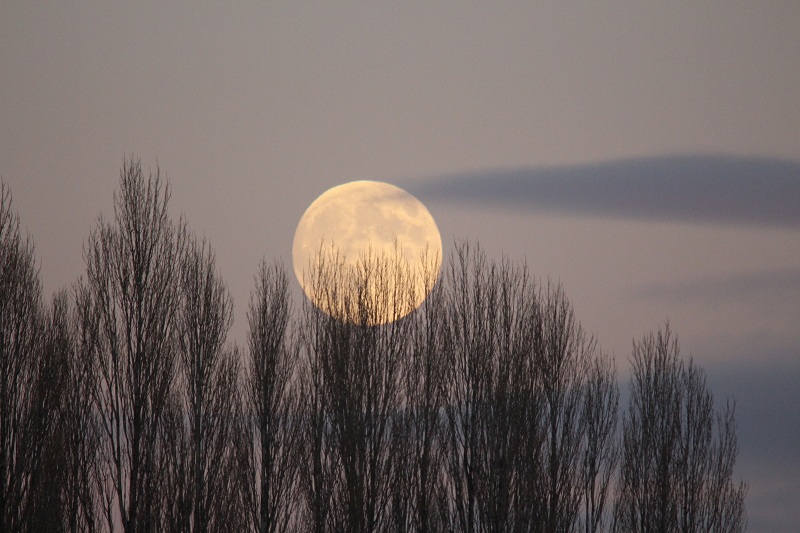
Moonrise, Hardy Farm


Tuesday, 6 December 2022

Muddy boots

Robin, Amberswood

I needed the exercise after yesterday so I had another go at yesterday's walk once I'd made sure the cat had tuna and the spadgers had fat balls and sunflower seeds (an extravagance, I know, but it's been bringing the goldfinches back in).

House sparrow, one of the "tawny" family, Stretford

Collared doves, Stretford

At the Trafford Centre I got the 132 to Wigan, the idea being to get off at Dangerous Corner (I do not invent these place names) and walk up to Daisy Hill Sewage Works (I repeat, I do not invent these place names). The water pipit I didn't manage to see last Winter is back so I thought I'd give it another go.

I got off at Dangerous Corner and tried — and failed — to find the end of the footpath I discovered last time when I was walking South from Daisy Hill. In the end I gave up and took the footpath up to Daisy Hill that runs North on the other side of the sewage works, thinking I might pick up the other path at the other end.

Walking to Daisy Hill

It was a bright, cloudy day which had brought out the woodpigeons and blackbirds on the way over. There were plenty of blackbirds in the hawthorn bushes in the fields by the path and a flock of blue tits and great tits bounced their way around them. The first hundred yards was atrociously muddy, the consequence of its being used as a bridleway though judging by the prints and broken down fence somebody had taken a rhinoceros for a walk recently. Robins and dunnocks took advantage of the disturbed ground and stood and watched while I disturbed it further. 

A dozen skylarks, Daisy Hill

I crossed the brook onto the open stubble fields where a dozen skylarks did a very good job of being invisible whenever they settled and a few magpies and black-headed gulls were raking over the pieces.

I couldn't find the footpath I was looking for. Google Maps suggested walking into the water treatment works for a wander but seeing as it's got big gates with "Keep out" on them I decided not to. Instead, seeing as there's a bus stop for the number 7 to Wigan at the corner of the lane and one was due in seven minutes I took the hint and waited for that in the company of a flock of starlings and a goldcrest.

The number 7 goes past Amberswood so I got off for an afternoon stroll. As I joined the path a flock of greenfinches gathered in the trees and a couple of robins fed on the ground. A mixed tit flock moved quietly through the gorse bushes, a willow tit making a point of popping out to have a look at me before retreating back into the depths. All the small bird noises were the dropping of dry leaves and the popping of gorse seedpods.

Amberswood 

I got to the point where the path diverges and one track drops down to the lake. One of the dog walkers stopped and told me that she'd just seen some deer down the other path so I took that to see where it went and whether or not I'd have the same luck. I hadn't gone far when I discovered I'd made the right choice: a beagle was doing a fair impersonation of the Hound of the Baskervilles down by the lake. A large, dark shape moving through the trees turned out to be a particularly dark, sooty brown buzzard with not a lot of white to its underparts. A bit further down, in one of the open glades, a sparrowhawk flashed by followed by a lot of relieved pinking in the trees behind me as a flock of chaffinches did a roll call. I had no luck with any deer, not altogether surprising given all the dog walkers and the howling beagle.

The path curves round at the corner near Liverpool Road and heads towards the lake, emerging about halfway down the path I took last week. I looked in vain for the juvenile scaups that were there last time but was compensated by a goldeneye amongst the tufted ducks. A lone first-Winter great crested grebe floated in the middle of the lake while a pair of dabchicks steamed across in close formation. It took me a while to find the teal in the edges of the reedbed. The mallards were a lot easier, they were congregated in the open water at the top end and were very busy and vocal with their billing and cooing. While I was watching them in the setting sun I was surprised to hear a chiffchaff calling in the trees behind me.

Tufted ducks, Amberswood

I didn't have time to do more than say hello to Low Hall in the twilight before the 559 to Bolton was due. A flock of long-tailed tits flitted by and a few dozen jackdaws flew in to roost in the trees. Not a bad end to the day.

Amberswood 


Monday, 5 December 2022

One of them days

What I should think of as the first of this Winter's woodpigeons turned up briefly in the back garden this morning. As did a host of spadgers, pairs of blue tits, collared doves and coal tits and one of the great tits.

It's getting harder to tell the spadger families apart these days, it's only the older males that are strikingly tawny-bellied or silver-cheeked. Both families have some very dark-bellied females and some white-bellied females, there are a couple of very dark-cheeked young males that don't seem to be attached firmly to either team.

I've been sleeping badly so I decided to ease myself into the week and it was lunchtime before I got on the bus intent for a wander Wigan way. And got off at the next stop and headed off to my father's so I could get him to the walk-in medical centre. Not a big deal, there was a minor problem that's the work of a moment but which neither he nor I should try to do. Ironically, because it wasn't a big deal and because the centre was ferociously busy with people needing urgent care it was hours before we were sorted. These days the front line of the NHS always reminds me of those old variety acts where someone would set up twenty or thirty plates spinning on top of sticks and keep them spinning so they didn't fall off.

On the way to the walk-in centre I noticed that the cold weather had brought in the woodpigeons with ones and twos dotted about in trees and on rooftops along the way.

Sunday, 4 December 2022

Woodpigeons

Woodpigeon 

I've been wondering about the recent absence of woodpigeons so I've been going through my records to see if I've been missing something. And it looks like I have been:

PeriodPercentage of records
AllNovember
Past 30 years11%7%
20167%5%
20176%4%
20187%3%
20198%7%
202010%6%
202114%13%
202215%7%

Three things:

  • These are the number of records, not the number of birds. An individual record might be one bird or a hundred. I'd have to do a lot of deep diving into the data for each year to find out whether I was just not seeing any woodpigeons at all, like this year, or if there were plenty around but only in large flocks.
  • I changed my style of recording during lockdown and these days I'm doing more detailed recording on journeys: instead of recording the birds along a line between two points that may be kilometres apart I've split it down so I'm recording the birds within approximately 1km² squares. (They're approximate because I'm dependent on landmarks to mark the boundaries.) There's a bias towards the large and easily identifiable when you're recording what you're seeing in transit so more detailed recording means more records of the large and easily identifiable. That's why pigeons, corvids and gulls make up a greater proportion of records than they used to. They've always been jockeying for position in the top five, mind.
  • I don't know why 2021 is an outlier. I'm going to have to have a rummage in the data for clues.

My general conclusion is that I've got to stop thinking of our woodpigeons as a resident population augmented by Winter visitors, like the local blackbirds and robins, and think of them as migrants with a breeding population and a Wintering population, like the starlings, blackcaps and chiffchaffs.


Saturday, 3 December 2022

Mosses

Fieldfare, Chat Moss

I didn't want to waste a bright, sunny December day so I went for a stroll across the Salford mosses. The weather stayed fine, if a bit nippy, but I had to work a bit at the birdwatching. Which is no bad thing, it gets boring if you're spoonfed all the while. I got the lunchtime train to Irlam and set off up Astley Road. Unusually, the Zinnia Street house sparrows were busy elsewhere and the hedgerows were relatively quiet.

Woodpigeons, Irlam Moss
This is the largest number of woodpigeons I'd seen at one place at one time in Greater Manchester for about a month.

There were a few crows in the fields and a couple of blackbirds about. The kestrel was perched on one of the telegraph poles near the houses for a change. Its usual perch was occupied by a trio of woodpigeons. There were a couple more further down the road but at no time today we're there any flocks of any size. 

Irlam Moss 

Things picked up in the hedgerows by the Jack Russell's gate. I spent a while disentangling a mixed tit flock from a mixed finch flock. The family of long-tailed tits and the goldfinches were easy enough, the bullfinches and chaffinches were elusive and the great tits and blue tits were busy in some ivies. All the while three or four dunnocks noisily chased each other in the leafy debris and nettles in the undergrowth. There were more birds in the hedge running down the lane to Prospect Grange but all save a few blue tits were keeping to the densest parts of the hawthorns.

Stock doves, Chat Moss

I crossed the motorway and walked down to Four Lanes End. The paddocks by the motorway were busy with blackbirds and robins, the hedgerows dead quiet. I was thinking that the turf fields were being a bit barren, a good crop of carrion crows and magpies but no wagtails or gulls, when a flock of a dozen stock doves rose up and settled back down to feed by a pile of palettes. Somehow the rich, warm lighting brought out the blue shades of the doves' plumage. Further investigation found a flock of mistle thrushes and a pied wagtail behind a barn, a couple of distant kestrels and a passing cormorant.

Chat Moss 

Chat Moss 

At Four Lanes End a flock of blackbirds had found the only rowan berries for miles and a flock of fieldfares flew in from the stubble fields to chatter in the branches above my head as I tried, and failed, to find out what was making the loud knocking noise at the base of a tree.

Little Woolden Moss

I had a brief look at Little Woolden Moss, just to touch base really. It was quiet in the late afternoon sun (there's not a lot of time between lunchtime and late afternoon this time of year). The usual family of carrion crows bobbed around on the far side of the moss. Wrens, blackbirds and linnets were closer to hand. In the far distance a flock of a hundred or so lapwings were flying off to roost. I spent a while just drinking in the light and colour.

Little Woolden Moss 

I retraced my steps and headed off down Twelve Yards Road. There were more fieldfares flitting between trees. I checked them all out to make sure they were all fieldfares, I've no idea what I was hoping to find but it was nice to find a few redwings and a yellowhammer. I've been finding buntings a bit thin on the ground this Autumn and I'm not sure if that's down to bad luck, bad fieldcraft or something similar to what's been going on with the woodpigeons.

Twelve Yards Road 

The last of the chaffinches and meadow pipits were settling in to roost in the stubble fields while a pair of kestrels hovered over the rough margins on either side. A scan around in the hopes of finding a barn owl over the rough grazing found me a buzzard and half a dozen woodpigeons. I didn't see any of the dozen female pheasants in the barley stubble until they saw me and flew up into the middle of the field.

Cutnook Lane 

A buzzard was sitting in the trees at the corner of Cutnook Lane. It flew over into the denser trees on the other side of the road and watched as I set off down the lane. There were more blackbirds and a few robins, song thrushes and woodpigeons as the sun set. 

Cutnook Lane 

I was over the bridge and onto Merlin Road just in time for the 100 to the Trafford Centre to go past before I got to the bus stop so I had to walk down to Liverpool Road for the 67 into Eccles and catch a bus from there. I hadn't really been feeling the cold while I was walking but I felt it in my leg muscles as I stood waiting for the bus. Still, I'd got a few hours' exercise and the weather had been dead right.

Chat Moss 


Thursday, 1 December 2022

Redcar

Eiders

Transpennine Express have got a promotion on at the moment where old folk like me can buy tickets to distant parts for £20 if bought online before the day of travel. I thought I'd give it a go. There's a direct train to Redcar from Oxford Road which is very straightforward so I decided I'd go for a couple of hours' North Sea seawatching.

I got the train and we chugged along without incident. It was ferociously busy between Huddersfield and York, as usual, but I'd managed to get myself a window seat and I was settled down watching the landscape roll by. One thing's for certain, whatever's been going on in Greater Manchester there's no shortage of woodpigeons in North Yorkshire.

It had been grey and a bit misty in Manchester, I had an attack of optimism when the clouds parted over the Pennines with a milky sun, then it became grey and misty again after York. I didn't hold out much by any seawatching as I walked down to Redcar Beach from the station.

Redcar Beach 

The first thing I spotted on the beach, besides the passing black-headed gulls and herring gulls, was a knot of birdwatchers a couple of hundred yards beyond the seafront cinema. I looked over to where they were pointing and saw a raft of eiders bobbing round in the surf. I kept an eye on them both as I walked down, scanning round every so often to see if anything else was about and being rewarded with cormorants, oystercatchers and a passing razorbill. I wasn't far off the crowd when I found what they were looking at: a female long-tailed duck amongst the eiders. I'm rather tripping over long-tailed ducks at the moment, which is nice as they've been noticeably lacking the past couple of Winters. 

Eiders

Long-tailed duck

There were lots of herring gulls on the sea as well as a bunch of smaller, dark gulls which had me baffled for a few minutes. Luckily there were a couple more amongst the black-headed gulls and common gulls on the beach. There's hardly an Autumn these days where I don't get myself confused over first-Winter common gulls. A noisy bunch of oystercatchers joined the gulls and started feeding at the tideline. Sanderlings and redshanks flew by but didn't settle.

Common scoters

I walked further up, keeping an eye on the sea all the while. The distant flock of gulls in the mist around the wind turbines became a flock of herring gulls and a couple of rafts of common scoters as I got a closer look. The scoters seemed all to be female-type birds, I couldn't see any black drakes unless they were in the misty distance. A couple of the scoters were slightly set apart from the rafts and were bigger and broader of beam. It took me a while to be sure they were velvet scoters, I've only ever seen one before and that was on a bright, sunny day some years ago. 

Divers. The bird on the right is definitely a red-throated diver, the one in the middle is probably a red-throated diver, I'm not sure of the one on the left.

Then I spotted three larger birds a few hundred yards further out. It didn't take me long to be sure they were divers but which one(s)? I struck lucky as they floated in a bit. One was definitely a red-throated diver. One might have been one. One looked slightly bigger but I wasn't sure if it wasn't just a trick of perspective. I lost them in the swell of the waves and while I was trying to find them again I spotted yet another diver a bit further along and further out that was definitely bigger than a red-throated diver and a lot more black-and-white. A black-throated diver, I've never seen one close to and this one wasn't for coming any nearer to shore and soon disappeared into the mists at the base of the wind turbines. I'd have had more luck with a telescope but I concluded a couple of years ago that I'm too old for lugging a telescope with me on public transport. A chap with a telescope came by and I pointed out where I'd been seeing the divers and between us we found a couple of red-throated divers which might have been two of the trio I'd been looking at before.

The mist rolled in some more and the light got worse. I'd had a couple of hour's exercise and birdwatching and added a couple more to the year list so I called it a day and managed to get back to the station with five minutes to spare for the next train back to Manchester. All in all, not a bad trip out on a gloomy sort of day.

Redcar Beach