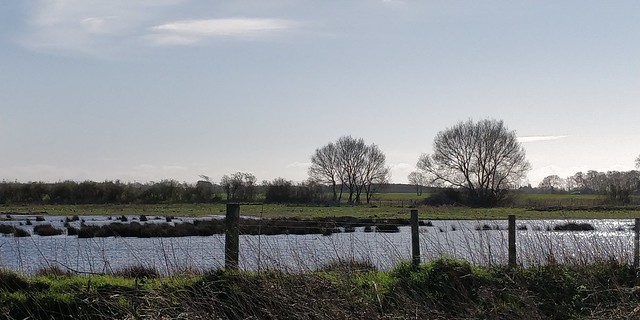
Black-tailed godwits, Leighton Moss

Saturday, 21 September 2019

Local patch

Barton Clough, rosebay willowherbs in the foreground
A quiet, very quiet, hour's wander round my local patch. No blackbirds, just the one robin and a lone chiffchaff. The blackcaps and whitethroats have evidently moved on. Only three goldfinches, this time last year there were dozens.

I've come to the conclusion we've lost our local buzzard. I hope it's moved on to more productive pastures.

There should be plenty for the Winter thrushes to eat when they turn up.

Pyracanthus
Gulls flying overhead included half a dozen lesser black-backed gulls, a couple of first calendar-year common gulls and a first calendar-year yellow-legged gull, all drifting South towards the Mersey Valley.

Friday, 20 September 2019

Morecambe Bay

Leighton Moss

A few hours' wandering round Leighton Moss. I didn't go down to the saltmarsh hides as the tide was out and there weren't many waders about as the train passed the pools. I decided that now I know I can get a over 55's train ticket that's £7 cheaper than the usual day return to Silverdale I'll come back next week for these hides.There were plenty of little egrets about, though and also a group of four great white egrets at the edge of the Eric Morecambe pool.

Lillian's Hide
It was relatively quiet, for all intents a late Summer's day without most of the Summer's visitors. The only warblers about were a few chiffchaffs and four singing Cetti's warblers. Dragonflies, particularly common hawkers and common darters, were very much in evidence.

As always the robins insisted on being photogenic
At least three great spotted woodpeckers, two males and a female, made themselves obvious in the willows around the reedbeds. Probably two of these flew over to the marsh harriers' favourite perching tree opposite the Griezedale Hide while I was there. One flew back over and fussed about in the willow tree next to the hide door.
I was trying, and failing, to get a photo of a great spotted woodpecker in the willow tree by the path.
This dunnock was not impressed.
Not sure if there was one or two male marsh harriers around, the one I saw late afternoon from the path by the road might have been the same one I saw from the Griezedale Hide.

The Causeway itself was exceptionally quiet but there was plenty to see from the Causeway Hide. Star of the show was probably the cormorant fishing very close to the front of the hide, swimming around with its head only just below water as it worked its way through a school of small fish. Every so often it would dive and reappear a few yards away, usually to the consternation of a raft of shovelers that were trying to have an afternoon kip. A couple of wigeon working their way along the edge of the reeds on the far side were harbingers of Autumn.

This cormorant was fishing close to the Causeway Hide
Shovelers, an eclipse male (right) and a couple of immature males
The light suited the shovelers nicely
Mute swan family off the public causeway
I seem to be seeing fewer marsh tits than usual at Leighton Moss this year, and nearly all on the path to the Lower Hide. I'm hoping this is just bad luck on my part and not an indication of decline.

Marsh tit
I did wonder if it was going to be the first day of Autumn without hirundines when, about four o'clock, a flock of swallows descended on the fields by the path to the Lower Hide.

Grange-over-Sands

It was still only half five by the time I'd finished at Leighton Moss so I thought I'd milk my old man's rail rover ticket and move a few stations on for an hour or two's birdwatching on the Cumbrian side of the bay. After checking the train timetables it looked like Grange-over-Sands was my best bet as it allowed a good hour and a half's window before the train back to Preston.

Kent Estuary from Grange-over-Sands

From the Promenade I could see a big flock of black-headed and lesser black-backed gulls out in the estuary with a few herring gulls and a couple of great black-backs. Nearer to shore there were half a dozen black-tailed godwits and a handful of curlews, with a dozen shelduck dabbling in the mud. Walking along the Promenade towards the river I found a flock of goosanders swimming in one of the channels and a lone whimbrel walked along the shoreline. A flock of about thirty lapwings clustered on one of the rocky islands.

With twenty minutes left I decided I should go and find somewhere that might offer a cup of tea (no such luck). Passing the ornamental gardens by the station I think I found out where Hodbarrow's bar-headed geese come from.

Bar-headed geese and friends, Grange-over-Sands ornamental gardens.
Sadly, I can't count the snow goose to the year list.
As I waited for the train a flock of twenty or thirty swallows flew high over before descending for a few minutes to grab a last few midges from over the salt marsh and then going on their way.

A picturesque sunset on the way back.

Arnside

Eric Morecambe Pool, Leighton Moss

Tuesday, 17 September 2019

Lunt Meadows

Yesterday's plan was to bob over to Lunt Meadows to see if the two American golden plovers were still there, have a nosy round Roughley's Wood then get the train back to Kirkby from Waterloo, taking in a quick wander round Crosby Marine Lake and a look at Seaforth Nature Reserve through the wire fence. This involves eight trains and two buses and seeing as the first train out was so late I'd have to wait an hour for the second one I jacked it in and went for a walk over at Etherow Country Park. Being a natural optimist I tried again today.

Both birds were showing well, though quite distant so I've had to heavily crop copies of the pictures to show that the small pale thing amongst the lapwings is one or other of them. Never seen an adult American golden plover before, they reminded me more of grey than golden plovers.

Adult American golden plover and lapwings
Adult American golden plover and lapwing
Adult American golden plover and lapwings
American golden plover with lapwings and Canada geese
The Canada geese, greylags and lapwings were very flighty. possibly because of a buzzard that flew low overhead as I arrived.

Buzzard
The supporting cast included a common sandpiper, quite a lot of mallards and teal, a few shovelers and gadwall and a few dozen pink-footed geese flying low and landing in fields on the other side of the river.

Mallard
Pink-footed goose
Nice to still have a few dragonflies and butterflies about, too.

Common darter
Roughley's Wood was very quiet except for a small flock of goldfinches, a couple of pheasants and a lone chiffchaff.

Over at Crosby Marine Lake there were plenty of gulls about, mostly herring and black-headed, with a few lesser black-backs and common gulls added for luck. Also quite a few swallows and house martins hawking low over the small pool. Strangely, no meadow pipits or skylarks.

On the beach there were a few flocks of gulls loafing about while redshanks, dunlins and oystercatchers fed close to the water's edge together with a lone whimbrel. A small flock of linnets bounced around in the vegetation by the sea wall.

Linnet
Not much on the water at Seaforth Nature Reserve, though a large flock of waders — mostly black-tailed godwits and oystercatchers — nearly covered one of the islands. What we once would have thought as being a small flock of starlings were stripping the brambles of any ripe blackberries. A couple of dozen curlews were roosting with the Canada geese by the rabbit warrens but were scared off by the rather overly boisterous appearance of a raven.

Back home to a "What time do you call this then?" welcome from the cat.


Monday, 16 September 2019

Etherow CP and Keg Woods

Etherow Country Park
The original plan for the day was to bob over to Lunt Meadows to see if the weekend's American golden plover was still about but lousy train services put the block on that so I decided to put my trust in buses and went over to Etherow Country Park and have a wander round Keg Wood.

Probably just as well I did: I hadn't checked my camera battery before I came out and it turned out to be flat. Bad enough missing nice shots of species you see regularly, missing out on something unusual that way would have been heart-breaking. Instead, I can bore people about the lovely photos of mandarin ducks, great spotted woodpeckers, coal tits and nuthatches that got away.

Keg Wood
Walking through the car park I had a surprise when a snipe flew in, tried to find somewhere to land, discovered that the car park was full of pensioners intent on having a nice cup of tea in the café, and flew off again. As always, the mandarin ducks on the little canal were being ridiculously photogenic, especially the juvenile male picking blackberries from a dangling bramble. A sparrowhawk and a buzzard soared high overhead. Walking down to where the river goes over the weir I was hoping there might be a dipper around; no joy but a family of grey wagtails were a good consolation prize.

Keg Wood
Keg Wood was busy with roving mixed flocks of small birds. Nuthatches seem to have had a good year, I counted a dozen all told. A couple of flocks of tits each included over half a dozen coal tits and the flock that came to have a look at me as I sat in one of the bus shelter affairs included a goldcrest, a chiffchaff and a couple of treecreepers. I bumped into three great spotted woodpeckers in different parts of the wood, a male and two females. Jays were very much in evidence, bouncing round the oak trees collecting acorns. 

Despite all the signs of Autumn there were still some signs of lingering Summer, especially a common darter dragonfly quartering the garden of the house in the middle of the wood. 

Sunday, 15 September 2019

Hope Carr

Sketch map: Hope Carr
Hope Carr local nature reserve in Leigh is the remnants of the settling beds used by the local water treatment works. On the South and West it's bound by Pennington Brook, there's an industrial estate to the East and the water treatment works form the Northern boundary. It's largely overgrown these days so it's hard to see the original checker board pattern of the beds.

Hope Carr
The main entrance to the reserve is at the end of Hope Carr Lane, off Warrington Road. The 19 and 28 buses between Leigh and Warrington are roughly every half hour, the bus stops on either side are just to the north of the junction with Hope Carr Lane. Coming up from Warrington, the bus stop is the second after the big roundabout for the East Lancs Road; you know you're coming to this stop when you cross Pennington Brook. Coming down from Leigh the bus stop is the second after you turn into Warrington Road. Once you get to the end of Hope Carr Lane there's a sharp right turn and a rough car park dead ahead. The paths leading from this take you round the reserve.

Hope Carr
The path going to the left passes by a fairly big pool that's largely hidden by a bank and large trees. There's a very rough path that gets you to the water's edge. The other pools in the reserve are much smaller and either very overgrown or well behind fencing. Ducks on the pools include shovelers. gadwall and teal, and green sandpipers are fairly regular passage visitors. The scrub covering most of the reserve attract good numbers of warblers, including Cetti's.

Hope Carr
The path going to the right takes you to the edge of the water treatment works. Keep an eye out for sparrowhawks, kestrels or one of the peregrines that nest in Leigh town centre. The big bramble patch along here hosted a Blyth's reed warbler last Winter.

Blyth's reed warbler

Alternatively, you can come into the reserve from the west, either walking in from Warrington Road (the 10 and 34 are very regular, you want the Mill Bridge stop then walk down Chestnut Avenue) or get the hourly 596 bus from Leigh Bus Station that goes round the houses then goes down Chestnut Avenue, the Wigshaw Close stop is the third one down the road. Just before this bus stop there's a little cut between the houses that leads to a bridge over Pennnington Brook and into the reserve.

High Rid Reservoir

Sketch map: High Rid Reservoir
High Rid Reservoir
High Rid Reservoir is a pocket handkerchief of a Pennine reservoir on the outskirts of Horwich. It's a place I've only recently started exploring.

There are plenty of buses along Chorley New Road, the 575 between Bolton Bus Station to Wigan Bus Station are roughly every ten minutes. The bus from Bolton stops at the Ox Hey Lane stop, the bus from Wigan at the Cambridge Road stop. There's a car wash at the corner of Fall Birch Road which is a short walk up to the reservoir. The trees lining the right-hand side of the round to hide the golf course get progressively thicker as you walk up the road.

Fall Birch Road becomes High Rid Lane at the sign saying the road's unsuitable for vehicles (though I reckon the lads from "Top Gear" could take it at eighty in a Lamborghini). Once past High Rid Farm you get nice views of the fields rising up towards Winter Hill.

The entrance to the reservoir is a little wooden gate at the corner. Once you step down and through the path around the reservoir is pretty good though it gets a bit muddy in wet weather.

Little gull and black-headed gull
Canada geese, mallards, tufted ducks, dabchicks and black-headed gulls are the regulars. Goosander, scaup, common scoters, goldeneyes and black-necked grebes sometimes drop in for a few days. In the Summer large flocks of swifts and hirundines hawk over the water.

Tufted ducks
Common, Arctic and black terns visit on passage. Every so often something different turns up.

Little gull
Don't forget to have a look to see what's going on in the fields around the reservoir. There's the usual compliment of wood pigeons, jackdaws and rooks and plenty of meadow pipits. Where there's Pennine pipits there's always the possibility of a merlin. The trees and bushes by the reservoir attract warblers in the Summer. There's also a small pond in the field near the gate that's worth checking for dragonflies.

Fields north of High Rid Reservoir
Grey and pied wagtails are regulars, you might find yellow or white wagtails on passage.

Grey wagtail

Pied wagtails

High Rid Lane, walking back to the main road
All in all a nice hour-and-a-bit's slow walk round.

Saturday, 14 September 2019

Lunt Meadows

Sketch map: Lunt Meadows and Roundley's Wood
Lunt Meadows is a Lancashire Wildlife Trust site roughly halfway between Maghull and Crosby in Merseyside. It's a stretch of flood meadow next to the River Alt and is particularly noted for its waders, waterfowl and owls. This is another of those places that look like a beggar to get to by public transport but turn out to be straightforward once you know how.

Lunt Meadows
The 133 bus runs between Kirkby Station and the bus stop across the road from Waterloo Station once an hour Mondays to Saturdays. It goes round the houses a bit and takes about forty minutes from Kirkby and twenty-five minutes from Waterloo. The bus stops at Lunt Village are across the road from each other. From Waterloo the bus eventually turns onto the A565 for a short stretch then goes down a long straight road (Long Lane) before taking a right turn onto Lunt Road and past the sign for the car park then into Lunt Village (which is tiny). From Kirkby the bus eventually goes through Sefton Village, then along a long straight road then takes a sharp right then a sharp left into Lunt.

Lunt Meadows, Roughley's Wood to the right
Don't walk down to the car park entrance. Take the little lane on the North side of the road. This takes you past Roughley's Wood (a small Forestry Commission woodland and worth a look round) and then onto Lunt Meadows.

Greylag goose
The paths around the reserve are pretty good. There are a few screen hides with seats dotted about and enough cover to let you see what's on the pools and in the reedbeds without spooking all the birds.

Wren
In Summer black-headed gulls and avocets breed, though large gulls tend to take most of the young avocets. The reedbeds, scrub and woodland attract a good variety of warblers, including Cetti's warblers in the brambles by the reeds. Buzzards, sparrowhawks and kestrels can be seen and marsh harriers seem to be fairly regular visitors. The large numbers of dragonflies and damselflies around the pools give you a chance of striking lucky with a hobby. Ducks include shovelers, gadwall and teal.

Outside the breeding season there are nearly always a few black-tailed godwits, ruff and snipe. Passage migrants include garganeys and wood sandpipers and sometimes something special may turn up.
Fairly poor, heavily-cropped record shot of the stilt sandpiper that visited in July 2019

Garganey
 In Winter Lunt Meadows is famous for the short-eared owls that hunt over the area in daylight.

Lunt Meadows