Black-tailed godwits, Leighton Moss
Showing posts with label farmland. Show all posts

Wednesday, 29 July 2020

Not quite Martin Mere

Jackdaw, Wigan Wallgate Station
I keep thinking about a visit to Martin Mere but they quite rightly and sensibly are only taking booked visits at the moment and that doesn't fit in with my way of getting up in the morning and deciding what I feel like doing today. Then I remembered that there's still a decent walk to be had between New Lane and Burscough Bridge via one or other of the meandering footpaths. So that's what I did today.

I changed trains at Wigan (there's a through train from Oxford Road but I decided I'd prefer to hang around in the open at Wigan for half an hour rather than twenty-five minutes at Oxford Road). No ravens today but I was joined by a jackdaw in rather downy moult.

I got off at New Lane and followed the path that runs beside the railway line. Not having a couple of hours at Martin Mere on the itinerary I had plenty of time to check out the water treatment works to see if there were any waders other than the pair of oystercatchers I'd been hearing since I left the station. There weren't but there was a couple of dozen each of starlings and pied wagtails and a mixed flock of house martins and swifts overhead. A flock of black-headed gulls took umbrage at a buzzard as it slowly flapped it's way towards New Lane.

Brown hawkers patrolled the ditch along the line and made forays across the path to put a scare into the insects feeding on the thistles, fumitories and mustards on the field margins. The thistles were also busy with goldfinches.

As I approached the pedestrian railway crossing I thought I could see a couple more buzzards over Martin Mere's reedbed. They floated closer and turned out to be a couple of female-type marsh harriers.

Greylag geese
A couple of dozen greylags were quietly feeding on the field across the line. It's not often you see greylags doing anything quietly. A kestrel hovered over the rough field on the other side of the path, the swallows feeding low over the grass moved over to another field just in case.

I followed the path down into the section where the boundary to Martin Mere's reedbed walk is defined by a high hedge. Chiffchaffs and great tits made it known they'd spotted me as I walked past. Just as I was coming to the little reed-filled pond the hedgerow was suddenly full of birds: a family of sixteen or so long-tailed tits, a family of great tits, a couple of blue tits and two or three chiffchaffs flitted about. Trying to keep track of them all and count them was a great demonstration of the effectiveness of safety in numbers, especially when a large part of that number caper about like a barrel of monkeys.

Juvenile long-tailed tit
Looking over the gate between the hedgerow and the reedbeds I could see more greylags on the pool in mid distance, together with a couple of coots, a mallard and about thirty lapwings.

A couple of reed buntings were singing from the reeds and a willow warbler called from one of the hawthorn bushes. There were more brown hawkers, together with a couple of common hawkers and a common darter. A banded demoiselle was kind enough to sit still long enough to have its photo taken.

Banded demoiselle
As much of a tawny owl as I've seen since March
More swifts and swallows overhead, plus another marsh harrier carrying something in its feet as it flew over towards the mere.

Instead of turning into the path to Martin Mere I turned into Tarlscough Lane and walked into Burscough. Flocks of swallows hawked low over the fields of barley. A big flock of a hundred or more house martins fed over the fields and farmyard at the corner of Curlew Lane. I kept checking the potato fields for yellow wagtails but no joy. No joy finding any tree sparrows either. I'd almost given up on corn buntings until I heard one singing in the field across the road from the horse paddocks. I was so intent on trying to see where it was singing from I didn't notice the buzzard sat on the telegraph pole next to me until it flew off and spooked a trio of woodpigeons.

So it turned out to be a nice productive walk even without the visit to Martin Mere.

Monday, 16 March 2020

Martin Mere

Black-tailed godwit, Martin Mere
The weather, and the birdwatching, was good for a final fling before birdwatching purdah.

From Marsh Moss Lane
Skylarks, reed buntings and goldfinches were singing along Marsh Moss Lane and a small flock of fieldfares flitted between the trees. Walking along the path by the side of Martin Mere (a lot drier than on my last visit!) a pair of greylag geese in the field honked their disapproval of me, a chiffchaff sang from the entrance to the reedbed walk and I was surprised to find a pair of stonechats in the rough near the ditch.

Martin Mere itself was showing signs of transition, with fewer whooper swans than last time and more avocets and ruffs. Most of the geese were greylags though there were a couple of small flocks of pink-footed geese in the fields beyond. The long-staying tundra bean goose eluded me completely. Plenty of pintails and wigeon about and quite a few pochard on the mere.

Female pintail from the Discovery Hide
Pair of pintail from the Discovery Hide

Ruff,  from the Raines Observatory
Not often I see one swimming

Female chaffinch by the Kingfisher Hide

Blackbird from the Kingfisher Hide

Wigeon and greylags from the Ron Barker Hide
Walking back from the Ron Barker hide I thought I'd have a look to see if the tawny owl was roosting in "the usual tree" at the corner by Tarslcough Lane. Much to my astonishment, it was, albeit tucked well into the ivy so that only a bit of its belly and a foot could be seen. I think the tree sparrows must have been busy nest building as they were heard far more often than they were seen.

Leaving Martin Mere there was a group of lesser black-backed gulls pretty far out in one of the fields along Tarlscough Lane. One bird was a good candidate for intermedius, with no contrast between the black on its wings and the wing tips even when it stretched its wings out.

Winter Hill from Red Cat Lane
Winter was still lingering on with flocks of fieldfares in the stubble fields, redwings in one of the horse paddocks on Red Cat Lane and a small herd of whooper swans on one of the distant carrot fields. Lots of skylarks and starlings but no corn buntings to be seen. A pair of red-legged partridges ran off from the roadside as I passed the last of the houses before the approach into Burscough.

Red-legged partridges, Red Cat Lane

Monday, 15 July 2019

Chat Moss

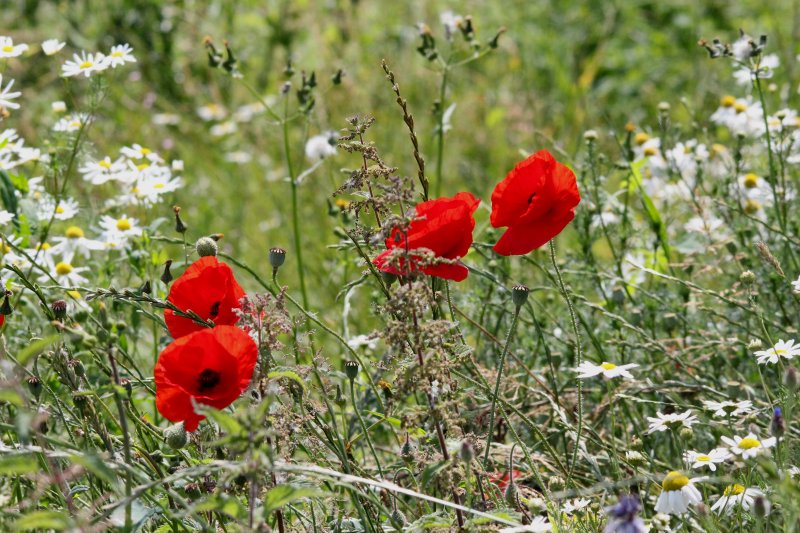
Roadside meadow: poppies, chamomiles and cornflowers, Chat Moss

Afternoon stroll across Chat Moss from Irlam and thence on to Glazebury. Each time it started to get too warm a cloud conveniently passed over and let the breeze do its work. 

All a bit July quiet birdwatching-wise but both reed buntings and yellowhammers were singing. The hedgerows were full of finches and warblers very quietly and unobtrusively about their business and frustratingly difficult to pin down. A male lesser whitethroat flying out of a maple bush and alighting momentarily on a fence post was a nice surprise. And, sadly, all the swallows seemed to have flown. 

On the plus side I heard my first quail singing. On the minus side I may as well have been watching an episode of Michael Bentine's Potty Time for all I saw of the bird. So I'll just have to settle for ten seconds' worth of "Wet my lips" coming from a corner of a field of ripe barley.

Tuesday, 25 June 2019

Chat Moss and Little Woolden Moss

Sketch map: Chat Moss and Little Woolden Moss

The rough oblong bounded by the East Lancs Road, the M6, the M62 and the M60 includes most of what remains of the old mosslands of South-East Lancashire, now divided between Greater Manchester, Cheshire and Lancashire. The railway line between Manchester and Newton le Willows runs east-west across this area. This post covers some of the mosses in the area south of the railway line and east of Warrington Road as it runs between Culceth and Glazebury. This area is mostly drained farmland though there are a few small pieces of woodland and Little Woolden Moss is being restored to wet peat bog.

Chat Moss

The 100 and 67 buses run down Liverpool Road between Manchester and Cadishead (the 100 calls in at the Trafford Centre along the way). The bus stop for Barton Moss Road is at the South-West corner of Barton Aerodrome. This road carries on over a bridge over the M62, joining Twelve Yards Road on the other side. Twelve Yards Road is a dead straight lane running the length of Chat Moss, past Four Lanes End and thence to Little Woolden Moss. At the Barton Moss end the margins are lightly wooded, past the crossroads with Cutnook Lane it's more open farmland with bits of hedgerow.

The 100 turns off Liverpool Road in Irlam. Get off at the bus stop on Merlin Road (this road runs close to and parallel with the M62), cross the road and walk down Cutnook Road, it runs parallel to the motorway a short way, then over the bridge and onto Chat Moss, passing a stables and a small fishery before reaching Twelve Yards Road. Most of the lane's lightly wooded at the margins.

Chat Moss along Cutnook Lane

The birds found along the wooded stretches include most of the usual subjects. In late Summer you may find tree pipits passing overhead.

You have a choice at the crossroads, you can turn left and walk down eventually to Little Woolden Moss or you can carry on North along the little path through the woodlands to the open landscape of Croxden's Moss, old peat workings South of the railway line. The pools here are worth checking out, you'll usually see mallards, teals and lapwings but there's always the chance of other ducks and waders. In summer it's fizzing with dragonflies and damselflies.

Kestrel, Chat Moss

Yellowhammers tend to make themselves more noticeable as you approach Four Lanes End, the crossroads with Astley Road, though they seem to be getting scarcer. Carry on for Little Woolden Moss. Turn right and head North for Astley Moss and Astley (That walk's nicer walking South from Astley).

Winter Hill from Four Lanes End

Little Woolden Moss

Little Woolden Moss is through the gate at the end of the road. This is an area of mossland that's in the process of being reclaimed as wet peat bog by Lancashire Wildlife Trust. It's a work in progress at the moment as it's a very new reserve.

Cotton grass, Little Woolden Moss

The path's well-signposted and pretty good. You soon come to a fork in the path: turn left and you'll get good views of the pools on the right and a field's thickness of rough heathland on the left. The most obvious waders on the pools are lapwings, curlews and oystercatchers; I haven't properly got to grips with this part of the reserve, my sightings are a bit sparse compared to most of the reports I've seen from others. Raptors include buzzards, kestrels and hobbies and a marsh harrier sometimes makes an appearance.

Little Woolden Moss

Halfway down the path forks again. The left turn leads on to Moss Road, thence through Cadishead Moss to Cadishead. If you keep going straight ahead you eventually come to a dead end and a sharp right turn taking you to Little Woolden Hall, a farm by the river Glaze, a good place to look out for wagtails, pipits and skylarks. Following the path leads you to a road taking you to Holcroft Lane, turn left to walk into Glazebrook or right to walk into Culceth.

Hobby, Little Woolden Moss


Retracing your steps, pass the entrance point and follow the path round the northern boundary of the reserve. The fields to the north include a lot of skylarks and, in Summer, quite a few yellow wagtails.  After a few hundred yards the path leaves the reserve and becomes a pleasant stroll through these fields, passing through a farmyard and eventually joining Moss Lane, crossing Glaze Brook and joining Warrington Road. Turn left for the bus stops, the stop on this side is for buses through Culceth to Warrington, the other side of the road is for buses through Glazebury to Leigh. It's a small, busy main road so be careful crossing it.

Sunday, 9 June 2019

Martin Mere

Sketch map of Martin Mere, New Lane and Red Cat Lane
Martin Mere is a very popular nature reserve surrounded by farmed moss lands. Getting there involves a decent walk but the effort's always worthwhile. Trains from Burscough Bridge are usually every half hour, those from New Lane are more irregular: every one, two or three hours and subject to radical change with each new timetable. There's a network of footpaths between Burscough and Martin Mere, these notes are limited to a few of the more direct routes between the stations and Martin Mere. So far my tally for the area covered in this post is 147 species.

Whooper swans, Martin Mere
Winter is the best time for seeing spectacular numbers of wildfowl but a visit at any time of the year will provide a wide selection of birds. The Martin Mere website includes very regular updates on bird sightings.

Starting from Burscough Bridge Station, go up the steps or walk round through the car park and turn left onto the main road (Moss Road). The next left turn takes you onto Red Cat Lane. This takes you straight to Martin Mere. Once you leave town there's a footpath on one or other side of the road for the full length. If you're a brisk walker it's half an hour's stroll. If you're like me and spend half your time trying to identify distant bodies across the fields you can stretch it out to an hour.

Fieldfare, Red Cat Lane
This can be a very rewarding walk for traditional farmland birds: there's a mixture of horse paddocks, arable fields and farmyards along the way. This is the most reliable place I know for corn buntings, sometimes you'll find one singing from the telegraph lines. Strangely enough I only see grey or red-legged partridges: if I see the one I don't see the other this time. No idea why that should be, it's a rule God came up with.

Red-legged partridges, Tarlscough Lane
About two-thirds of the way a road — Curlew Lane — branches off to the right and goes on to the nature reserve at Mere Sands Wood. This is also the point where Red Cat Lane becomes Tarlscough Lane. Curlew Lane is a good place to look for yellow wagtails.

Tarlscough Lane, opposite Martin Mere
Carrying on down Tarlscough Lane it's a short walk to Martin Mere. The road on the left is Marsh Moss Road which goes down to New Lane Station. Just after this on the same side of the road there are a couple of houses, immediately after the last there's a footpath running parallel to the road which leads to Martin Mere.

Martin Mere

In Winter there are huge numbers of wildfowl with a supporting cast including ruffs and black-tailed godwits, in Summer nesting black-headed gulls and shelducks with common terns and avocets. Buzzards, kestrels and marsh harriers can usually be seen and it's always worth checking out the fence posts on distant fields to see if any peregrines or barn owls are perched on them. You may strike lucky and see a merlin or a hen harrier on a Winter visit. The usual woodland species, together with a good population of tree sparrows, can be found along the paths and on the feeders by the Janet Kear Hide. The Reedbed Walk is a relatively new addition to the reserve and has already attracted bearded tits and even the occasional bittern.

(The bird gardens can be useful for familiarising yourself with exotic wildfowl that you might bump into in future.)

Leaving the visitor centre follow the path bearing right to get to the first set of hides. It's a good idea to check the board outside the smaller In Focus hide to see if anything interesting's been reported today. The Discovery Hide is the best place to start: it overlooks the main mere and lets you get your eye in as many of the birds will come very close to the hide.

Ruff, Martin Mere
The most obvious wildfowl in Winter are the whooper swans, greylags and pink-footed geese; the ducks include large numbers of mallard, teal, wigeon and pintail.

Pintail, Martin Mere
You have a choice now: follow the path to the right down towards the Ron Barker Hide or go left and follow the path towards the United Utilities Hide and the Reedbed Walk.

Towards the Ron Barker Hide

This is a lightly wooded path with a few hides along the left-hand side. The first is the Raines Observatory, a small glazed hide which used to be the best place for getting your eye in on the mere in a warm place (the enclosed half of the Discovery Hide.has taken over this rôle). Look out for tree sparrows, they use the nest boxes in this area.

The next hide is the Hale Hide. This overlooks a small pool  by the mere. This can be a good place for getting close views of passage waders, particularly green sandpipers.

Green sandpiper, Martin Mere
Past the duckling nursery the path branches: the path to the left loops round to the Kingfisher Hide and rejoins the main path further down.  The Kingfisher Hide overlooks a couple of small pools and is on slightly higher ground, giving a good overview of this part of the reserve.

Kingfisher Hide, Martin Mere
In Winter it's a good idea to check the ivy-covered trees in the corner of the reserve as the lower path loops round. Most days there'll be a tawny owl roosting deep under cover.

Finally, we get to the Ron Barker Hide which overlooks two fairly large, shallow pools and a sluice channel. This is probably the best hide for passage waders such as wood sandpiper. In late Spring you can get good comparison views of both little ringed and ringed plover. The large numbers of wintering teal sometimes include a green-winged teal. The sluice is a favourite hunting ground for kingfishers. In Winter and early Spring barn owls hunt over the fields to the right of the hide, sometimes coming quite close. A few years back a pair of black-winged stilts lingered in the field by the hide and teased us with the hopes that they might breed before moving on to parts unknown.

Kingfisher, Martin Mere


Towards the United Utilities Hide

The bank to the right of the path here is fairly new, this is where the old Swan Link Hide used to be. This was a very long hide giving an excellent view of the whole length of the mere and is sadly missed, even though it was getting a lot ramshackle towards the end of its life. A couple of viewing points are all that remain but they give decent views of this side of the mere.

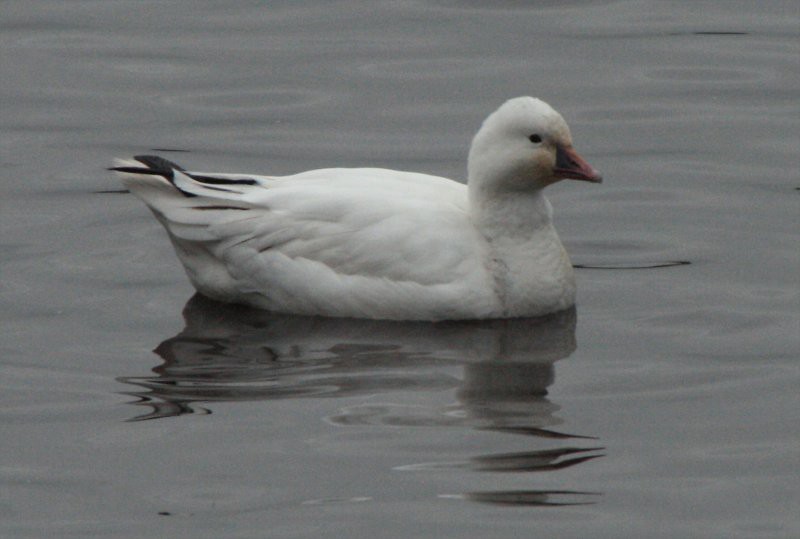
Ross' goose, Martin Mere
All Ross' geese are treated as escapes but who knows, records like this may get reassessed by the Rarities Committee some time in the future.
I tend to skip the Gladstone Hide and go straight down to the Janet Kear Hide. This might be doing it a disservice but it's been a long while since I found it productive. The feeding station at the Janet Kear Hide attracts good numbers of tits and finches, including bramblings in Winter, and great spotted woodpeckers are regular visitors. The small pool here usually has a pair of nesting moorhens.

Great spotted woodpecker, Martin Mere
The Janet Kear Hide is at the corner of a path running by the Harrier Hide, looping around the Reedbed Walk, past the United Utilities Hide and back to this corner.

The United Utilities Hide is on a slight rise that gives you a panoramic view of the reserve. As you go in the main mere is to the right of you, the Ron Barker Hide is a quarter of a mile dead ahead of you,  the Harrier Hide and Reedbed Walk are behind you and to your left. The fields to the left of the hide host hundreds of pink-footed geese in Winter and sometimes you may find barnacle geese or white-fronted geese amongst the crowd.

The path next to the United Utilities Hide takes you anti-clockwise around the Reedbed Walk. You can get a better view of most of the pools from the hides as they have elevated views but the walk's worth it, especially in Summer when you've a very good chance of hearing eight or nine species of warbler as well as cuckoos. The reedbeds also host a variety of damselflies and dragonflies.

Reedbed walk, Martin Mere
The path eventually leads to the Harrier Hide. This hide looks good but is hard work to use. It overlooks a large, reed-lined pool that is quieter than the main mere but still worth checking out. Pochards and great-crested grebes seem to prefer this pool to the main mere.

Sunset, Martin Mere
Leaving Martin Mere you can go down Tarslcough Lane back to Burscough Bridge or you can take one of the paths that lead to New Lane. Check the train times before aiming for New Lane; I generally allow forty minutes for the shorter walk (it invariably takes less than that but better safe than sorry given the frequency of trains here) and add another good half hour if I'm taking the long walk. If you miss the train there are footpaths to Burscough Bridge or you may strike lucky and be able to catch a train going the other way and change further down to come back up again.

Martin Mere to New Lane

Going back along the footpath by Martin Mere, when you reach the houses turn left and follow the path along the field boundary (this gets quite muddy at times). There are usually a few geese or shelducks in the field, possibly a little egret and if you're dead lucky in Winter you may disturb a woodcock (or it might disturb you as it flies off unexpectedly from under your feet). At the end of the field you have a choice: go through the gate and do the long walk skirting Martin Mere's reedbed or turn left for Marsh Moss Road. 

The long walk skirts round the southern boundary of Martin Mere then heads West. You then go round three borders of a field before crossing the railway line and joining the path running by the line that goes down to New Lane Station. It won't be long before you realise you've reached a point where you're about ten yards away from the start of the walk around that field! That frustration aside this is a pleasant enough walk on a Summer's day.

The short walk takes you through a small patch of woodland through to a gate onto Marsh Moss Road. Be careful here: it's a small road but a busy one with lorries and tractors using it and no footpath beside it. On the opposite side of the road to the gate is the start of a path over the fields that eventually gets to Burscough Bridge Station. This is another nice walk on a Summer's day. Turning right from the gate and following the road down we get to New Lane Station. There are a couple of corners that you need to be careful about because of limited visibility but once you get to the houses it's pretty plain sailing to the station.

Along Marsh Moss Lane

Tuesday, 9 April 2019

Carrington Moss

Sketch map of Carrington Moss
Carrington Moss is an unremarkable piece of farmland, which makes it remarkable within Trafford where every piece of green space bigger than a beach towel is marked as prime development space for executive housing. Now you'll never guess what… Which is why I should write it up while it's still there.
Carrington Moss
The northern boundary of the moss is an industrial estate, the petrochemical works being the most obvious landmark.

From Carrington:

The bus stop is near the corner of Manchester Road and Isherwood Road. The buses go through Flixton, turn a sharp left after the garden centre then go down the dead straight Flixton Road then do an over-complicated right turn at the crossroads onto Manchester Road.
  • The 247 bus from the Trafford Centre to Altrincham
  • The 255 from Manchester via Urmston
  • You can catch either of these from Flixton train station (turn left as you leave the station and it's less than a minutes' walk to the bus stop). If you choose to walk down to Carrington, turn right and follow the road down; cross the road before you get to the garden centre (you don't want to be trying to cross at the top of Flixton Road: the motorists are too busy remembering to slow down to look for pedestrians). 
Walk down Isherwood Road to get to Carrington Moss.

From Altrincham

  • The 247 bus from Altrincham to the Trafford Centre meanders its way through Broadheath. You want the first stop when it turns onto Sinderland Road. (There's allegedly a bus stop further along Sinderland Road just after Altrincham Sewage Works but I've never found it or seen it from the bus). Cross the road, walk down Heathermount and you'll get to a gap that lets you get onto the dead straight though sometimes overgrown path that's the remains of the old railway line from Irlam to Timperley. Turn left and follow it past the sewage works and on towards Birch Road and the southern end of the moss.
I'm always coming here from north of the Mersey so that's how I'll describe the site.

Walking down Isherwood Road there's farmland on the left and houses then an industrial estate on the right. Towards the end of the road the farmland's replaced by a big electricity station and the industrial estate's hidden by trees. Around this point Isherwood Road becomes Birch Road but you'd never know it. Keep an eye on the skies: you've a good chance of seeing buzzard, kestrel or sparrowhawk and a raven may pass once in a while.

When you get to the security barrier (yes really, it's to stop unauthorised people driving to a well-known football team's training ground) you have a choice. 
  • Carry on down Birch Road then turn right at the first opportunity. In Winter this stretch hosts good-sized finch flocks with a good chance of a few bramblings in there.
  • Turn left onto the path that follows the fenced-off area. Behind the fence is the Shell Pool nature reserve which is accessible by permit only. The bits of wet woodland surrounding the pool is always worth a look: finches in Winter, warblers in Summer. I keep hoping to find willow tits here but haven't for twenty-odd years. You can get tantalising glimpses of the pool through the trees. Mallard, Canada goose, coot and black-headed gulls are the usual regulars with tufted duck, gadwall and dabchicks as frequent supporting cast. From this perspective you'll usually hear more than you'll see.
Juvenile treecreeper, Carrington Moss
Further on, by the remains of the old Shell plant, the path turns round into a small copse which has its fair share of mixed tit flocks in Winter and warblers in Summer. As you go down the path the trees thin out until they become tree-deep borders to the fields.

The leafy lane going due south from the petrochemical works.
At the first crossing point you should turn left and go back towards Birch Road and on towards the riding school. (I couldn't possibly tell you to continue down past the "No entry" signs and continue on down to the end to meet the path that's the remains of the railway line.) As you turn left the path margins change: on the North side there's a high hawthorn hedge with a few big gaps, to the south there's an open field. You'll usually find yellowhammers and chaffinches in the hedge, in Winter the occasional brambling. In Summer you might strike lucky with lesser whitethroat in the field margins. In late Summer you've a good chance of seeing yellow wagtails feeding in the fields.

Yellowhammer, Carrington Moss

Carrington Moss

Yellow wagtail, Carrington Moss