Black-tailed godwits, Leighton Moss

Thursday, 18 July 2019

Urban birdwatching: Salford

I remember the days when the River Irwell in Manchester City Centre and Salford owed more to the contents of a chemistry set than Mother Nature. These days it's not uncommon to see cormorants, goosanders and grey wagtails and there's often a few sand martins flitting about.

On the way to visiting friends in Salford I got off the bus at Lower Broughton and had a nosey from Broughton Bridge to see what was about. The most obvious, and noisy, were the big flocks of Canada geese and black-headed gulls. The mallards were a lot quieter; I was surprised to see one duck still sitting on a nest. Three grey wagtails, an adult male and two youngsters, hawked for flies from an upturned shopping trolley on one bank, two cormorants sat on rocks on the other, with a heron a bit further down.

Heron, River Irwell, Lower Broughton
A couple of goosanders quietly made their way upstream.

Goosander, River Irwell, Lower Broughton

Tuesday, 16 July 2019

Leighton Moss

I was cursing today because I was having to stay in to wait for the TV repairman and my news feed was full of pictures of the pectoral sandpiper that's at Leighton Moss. An hour before the appointed time ("Any time between one o'clock and six o'clock") I thought I'd turn the box on ready so they could see the problem and lo and behold! some time since half ten last night the problem had been sorted. Appointment cancelled and I decided to go for a walk, the plan being to go and knacker myself traipsing round Etherow Country Park to see if all that ancient oak woodland might hold a wood warbler. 

Then I realised that it would be quicker to get the train that was due in fifteen minutes and go to Leighton Moss to see if the sandpiper was still there. So I did. And it was.


Pectoral sandpiper (lower right) and redshanks, Allen Pool at Leighton Moss
Pectoral sandpiper, Allen Pool at Leighton Moss
Amongst the supporting cast from the Eric Morecambe Hide were a trio of sleeping spoonbills, an adult and two juveniles (nearly all my sightings of spoonbills have been of untidy flock mattresses on stilts), and twenty-three little egrets.

Spoonbills, Eric Morecambe Hide at Leighton Moss
Spoonbill, Eric Morecambe Hide at Leighton Moss
Little egrets, Eric Morecambe Hide at Leighton Moss
This common sandpiper decided on comfort over aesthetic effect.

Common sandpiper, Eric Morecambe Hide at Leighton Moss
And Summer is over as far as some waders are concerned.

Knots, dunlins and black-tailed godwits, Allen Pool at Leighton Moss
The walk down to the coastal hides from Silverdale Station was eventful by the purest of dumb luck. I'd stepped onto the verge of the road to wait while three cars made a complete Horlicks of passing each other on a narrow bridge when I happened to look up.

Osprey, Leighton Moss
Not the best picture I'll ever take in a panic but the best I've got of an osprey.

I'd spent yesterday trying and failing to get pictures of flying sand martins and swallows. On the way back from the hides I found I could manage a few photos so long as they were sitting down.

Sand martin, Leighton Moss
Swallow, Leighton Moss


Monday, 15 July 2019

Chat Moss

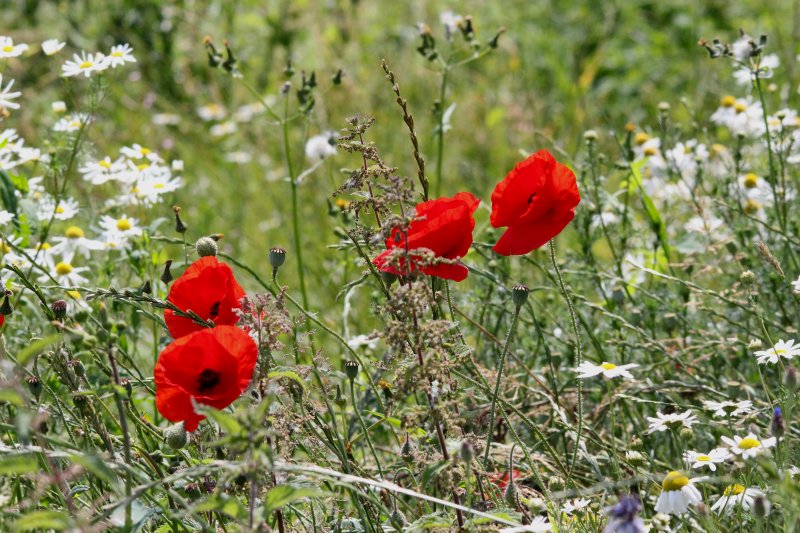
Roadside meadow: poppies, chamomiles and cornflowers, Chat Moss

Afternoon stroll across Chat Moss from Irlam and thence on to Glazebury. Each time it started to get too warm a cloud conveniently passed over and let the breeze do its work. 

All a bit July quiet birdwatching-wise but both reed buntings and yellowhammers were singing. The hedgerows were full of finches and warblers very quietly and unobtrusively about their business and frustratingly difficult to pin down. A male lesser whitethroat flying out of a maple bush and alighting momentarily on a fence post was a nice surprise. And, sadly, all the swallows seemed to have flown. 

On the plus side I heard my first quail singing. On the minus side I may as well have been watching an episode of Michael Bentine's Potty Time for all I saw of the bird. So I'll just have to settle for ten seconds' worth of "Wet my lips" coming from a corner of a field of ripe barley.

Wednesday, 10 July 2019

Pennington Flash

Afternoon toddle round Pennington Flash. The clouds loomed large but it never got round to raining. 


Egyptian goose, Pennington Flash
Spotted this Egyptian goose passing by as I was buying a sausage butty from the van. A nice addition to the year list (I'd had no luck to date because the resident Egyptian goose at Keg Pool was taken into care last Guy Fawkes Night and English Nature won't issue a licence to let it go back home despite its having lived there without incident for the past twelve years. Egyptian goose is on DEFRA's kill list because they devour cattle or somesuch.) 

Quite a few young kingfishers whizzing round, refusing to stop for photographs. Better luck with a pair of courting terns looking like they might have a go at nesting here after all and a nice family group of little ringed plovers.


Common terns, Pennington Flash
Common tern, Pennington Flash
Juvenile little ringed plover, Pennington Flash

Little ringed plovers, Pennington Flash


Icing on the cake was a family of roe deer coming down for a drink across from the Tom Edmondson Hide.


Roe deer fawn, Pennington Flash

Roe deer fawn, Pennington Flash

Roe deer hind, Pennington Flash

Sunday, 7 July 2019

Hodbarrow

Old iron workings, Hodbarrow
I had a free return to anywhere by Northern Rail ticket (in recompense for being left stranded more than an hour at Edale the other day) so decided I'd have a push out to Millom for a nosy round the RSPB reserve at Hodbarrow. Nice, but not overly hot, weather for a stroll.


Oystercatchers, Hodbarrow
Sandwich tern, Hodbarrow
Amongst the hundreds of nesting black-headed gulls and sandwich terns were a couple of dozen common terns and, eventually, I spotted fourteen little terns hiding in plain sight in the gravel rubble. 


A dozen nesting little terns hiding in plain sight, Hodbarrow
Also good to see a lot of eider ducklings and a single, rather unseasonal pink-footed goose.


Eiders
Pink-footed goose, Hodbarrow
A pair of bar-headed geese brought an exotic touch to the whole thing.

Bar-headed geese, Hodbarrow
The spit of land poking out from the water sports area hosted good numbers of nesting lesser black-backed gulls and a couple of pairs of nesting great black-backs.


Thursday, 27 June 2019

Sunny day at Leighton Moss

A stroll round Leighton Moss today in blazing sunshine.

A couple of years ago a few nesting rafts were put on the pool by Lilian's Hide, with the hope that they might attract terns (they even have some tern decoys to tempt them in). Typically, they've been taken over by black-headed gulls. It's interesting to watch the interplay between nesting pairs: lots of noise and display aggression but no actual fighting.

Black headed gulls, Leighton Moss
The marsh harriers were showing well, with one of the males coming very close to the Griesdale Hide at one point.

Male hen harrier, Leighton Moss
A bittern was the highlight at the Causeway Hide. Their camouflage doesn't always work this time of year: side-on a bittern presents quite a lot of straw yellow against a background of green reeds. It's a different matter when it turns round, the combination of lateral compression and the strong streaking on the neck completely disrupt its shape and it looks anything but birdlike.

Bittern, Leighton Moss

Also good to see a family of pochards on this pool today.

Pochards, Leighton Moss

Tuesday, 25 June 2019

Chat Moss and Little Woolden Moss

Sketch map: Chat Moss and Little Woolden Moss

The rough oblong bounded by the East Lancs Road, the M6, the M62 and the M60 includes most of what remains of the old mosslands of South-East Lancashire, now divided between Greater Manchester, Cheshire and Lancashire. The railway line between Manchester and Newton le Willows runs east-west across this area. This post covers some of the mosses in the area south of the railway line and east of Warrington Road as it runs between Culceth and Glazebury. This area is mostly drained farmland though there are a few small pieces of woodland and Little Woolden Moss is being restored to wet peat bog.

Chat Moss

The 100 and 67 buses run down Liverpool Road between Manchester and Cadishead (the 100 calls in at the Trafford Centre along the way). The bus stop for Barton Moss Road is at the South-West corner of Barton Aerodrome. This road carries on over a bridge over the M62, joining Twelve Yards Road on the other side. Twelve Yards Road is a dead straight lane running the length of Chat Moss, past Four Lanes End and thence to Little Woolden Moss. At the Barton Moss end the margins are lightly wooded, past the crossroads with Cutnook Lane it's more open farmland with bits of hedgerow.

The 100 turns off Liverpool Road in Irlam. Get off at the bus stop on Merlin Road (this road runs close to and parallel with the M62), cross the road and walk down Cutnook Road, it runs parallel to the motorway a short way, then over the bridge and onto Chat Moss, passing a stables and a small fishery before reaching Twelve Yards Road. Most of the lane's lightly wooded at the margins.

Chat Moss along Cutnook Lane

The birds found along the wooded stretches include most of the usual subjects. In late Summer you may find tree pipits passing overhead.

You have a choice at the crossroads, you can turn left and walk down eventually to Little Woolden Moss or you can carry on North along the little path through the woodlands to the open landscape of Croxden's Moss, old peat workings South of the railway line. The pools here are worth checking out, you'll usually see mallards, teals and lapwings but there's always the chance of other ducks and waders. In summer it's fizzing with dragonflies and damselflies.

Kestrel, Chat Moss

Yellowhammers tend to make themselves more noticeable as you approach Four Lanes End, the crossroads with Astley Road, though they seem to be getting scarcer. Carry on for Little Woolden Moss. Turn right and head North for Astley Moss and Astley (That walk's nicer walking South from Astley).

Winter Hill from Four Lanes End

Little Woolden Moss

Little Woolden Moss is through the gate at the end of the road. This is an area of mossland that's in the process of being reclaimed as wet peat bog by Lancashire Wildlife Trust. It's a work in progress at the moment as it's a very new reserve.

Cotton grass, Little Woolden Moss

The path's well-signposted and pretty good. You soon come to a fork in the path: turn left and you'll get good views of the pools on the right and a field's thickness of rough heathland on the left. The most obvious waders on the pools are lapwings, curlews and oystercatchers; I haven't properly got to grips with this part of the reserve, my sightings are a bit sparse compared to most of the reports I've seen from others. Raptors include buzzards, kestrels and hobbies and a marsh harrier sometimes makes an appearance.

Little Woolden Moss

Halfway down the path forks again. The left turn leads on to Moss Road, thence through Cadishead Moss to Cadishead. If you keep going straight ahead you eventually come to a dead end and a sharp right turn taking you to Little Woolden Hall, a farm by the river Glaze, a good place to look out for wagtails, pipits and skylarks. Following the path leads you to a road taking you to Holcroft Lane, turn left to walk into Glazebrook or right to walk into Culceth.

Hobby, Little Woolden Moss


Retracing your steps, pass the entrance point and follow the path round the northern boundary of the reserve. The fields to the north include a lot of skylarks and, in Summer, quite a few yellow wagtails.  After a few hundred yards the path leaves the reserve and becomes a pleasant stroll through these fields, passing through a farmyard and eventually joining Moss Lane, crossing Glaze Brook and joining Warrington Road. Turn left for the bus stops, the stop on this side is for buses through Culceth to Warrington, the other side of the road is for buses through Glazebury to Leigh. It's a small, busy main road so be careful crossing it.